
Materials: Poplar, 24k Gold leaf, Acrylic, Aluminum
The Cocktail Table
Inspiration rarely announces itself. Sometimes it is found in architecture, fashion, or the interior of a great automobile. Other times, it comes from something far more ordinary; a bottle sitting on a bar.
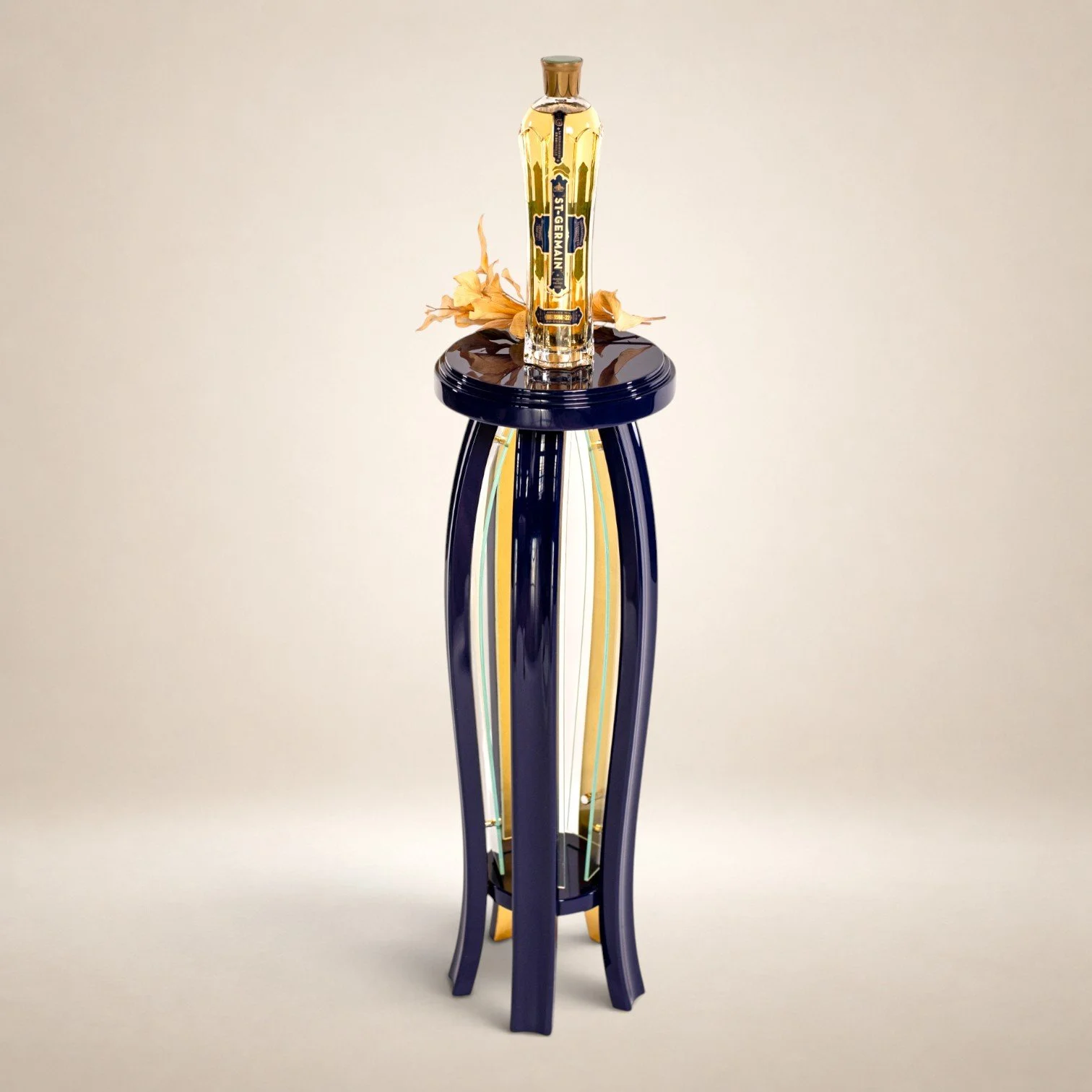
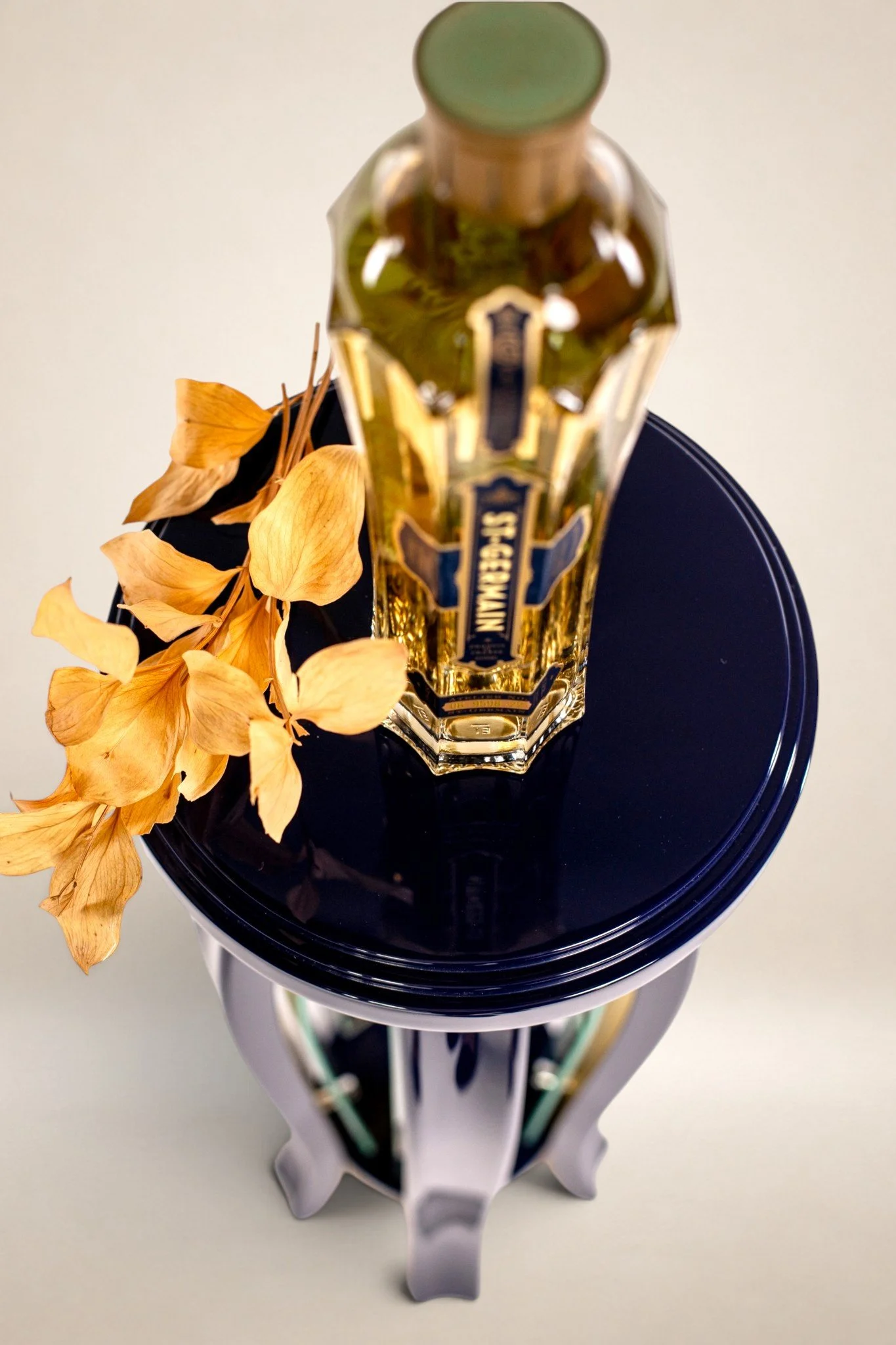
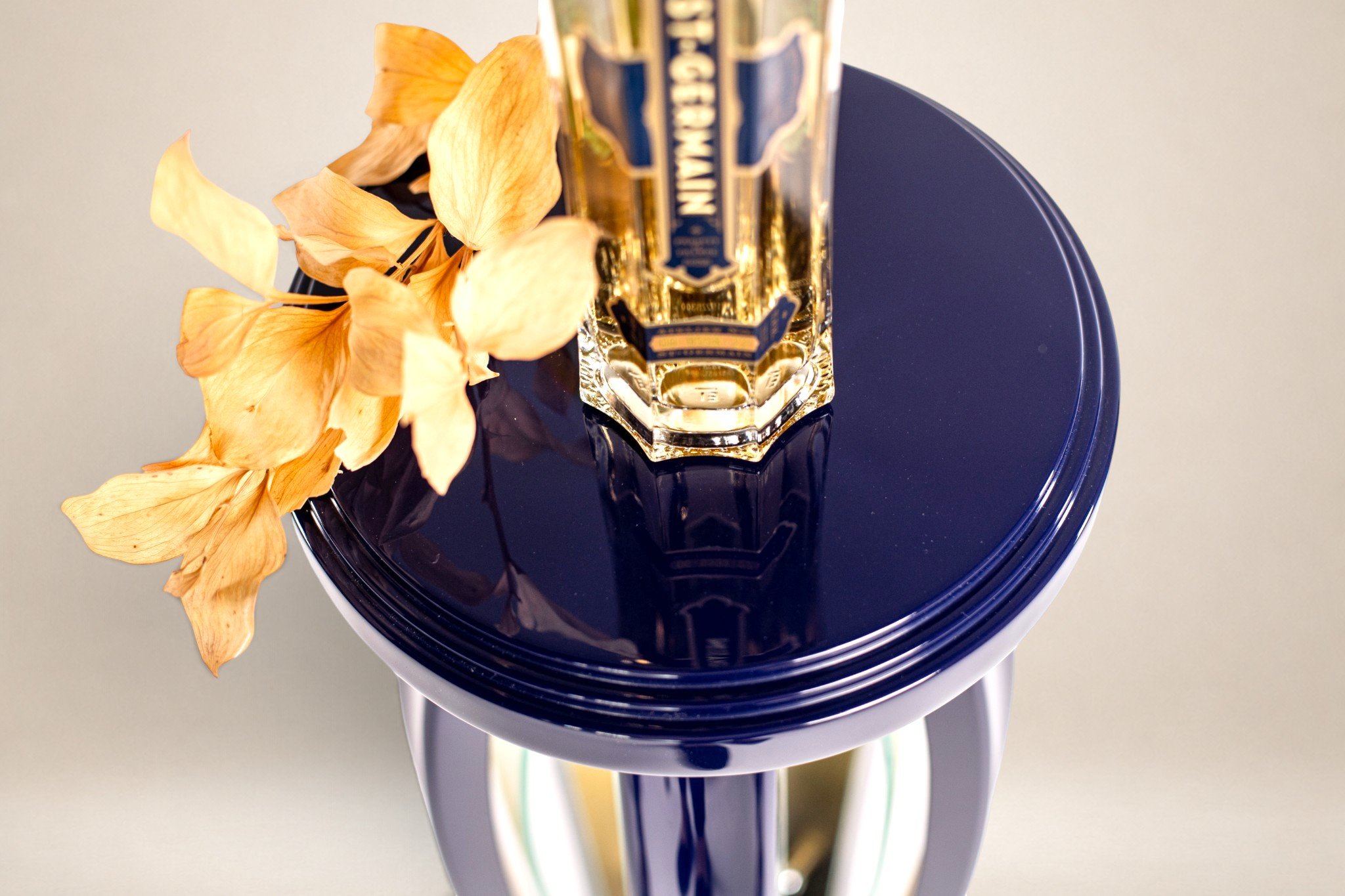
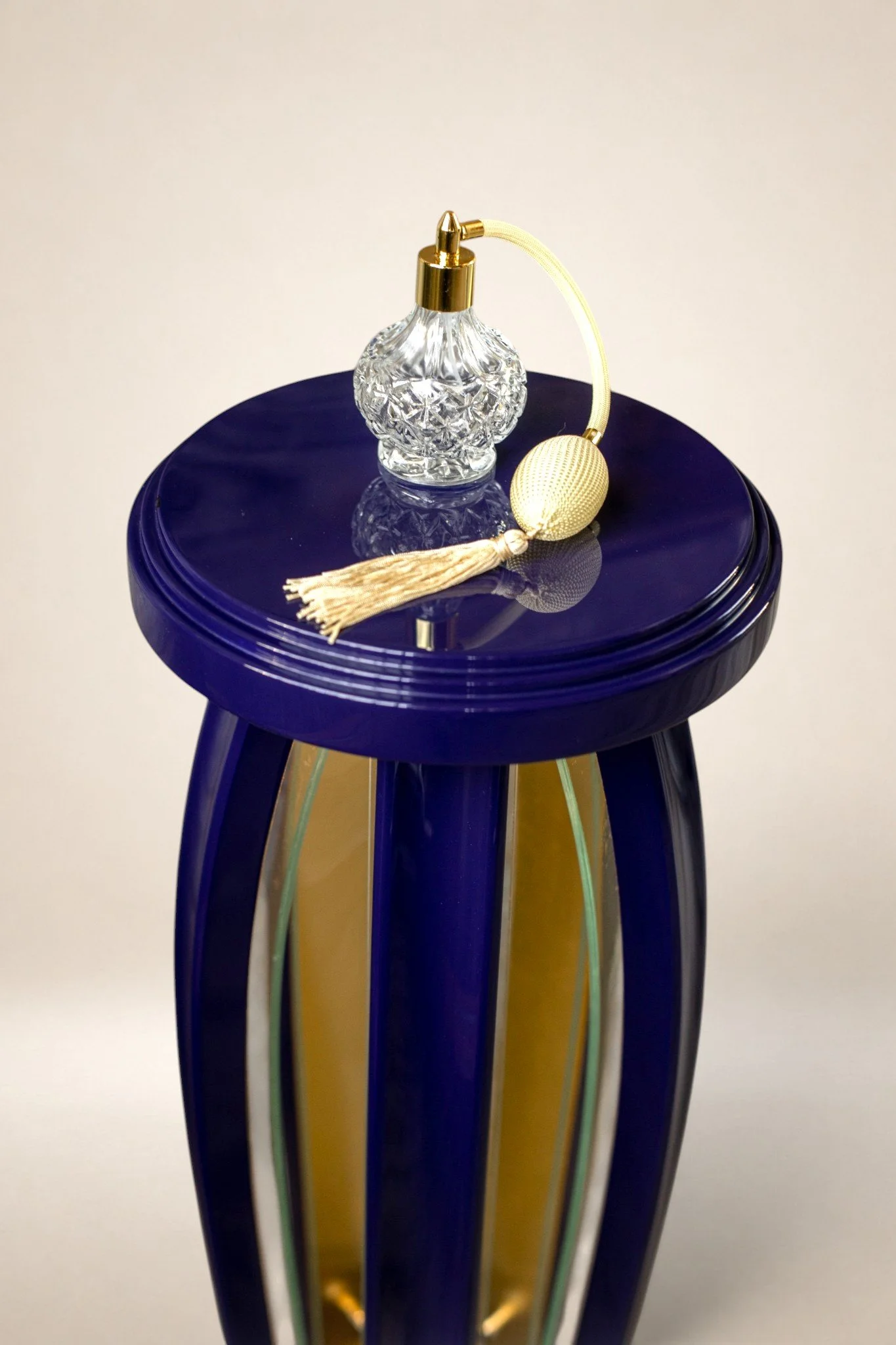
The Cocktail Table draws its inspiration from the unmistakable Art Deco character of a bottle of St. Germain: its elongated proportions, faceted geometry, rich gold detailing, and distinctly Parisian sense of glamour. Rather than interpreting the bottle literally, its visual language was translated into furniture; allowing its lines, proportions, and ornamentation to become the foundation for an entirely new object.
It is also a reminder that inspiration need not come from grand or obvious sources. Even everyday, perhaps seemingly mundane objects can reveal unexpected beauty when viewed through a different lens.
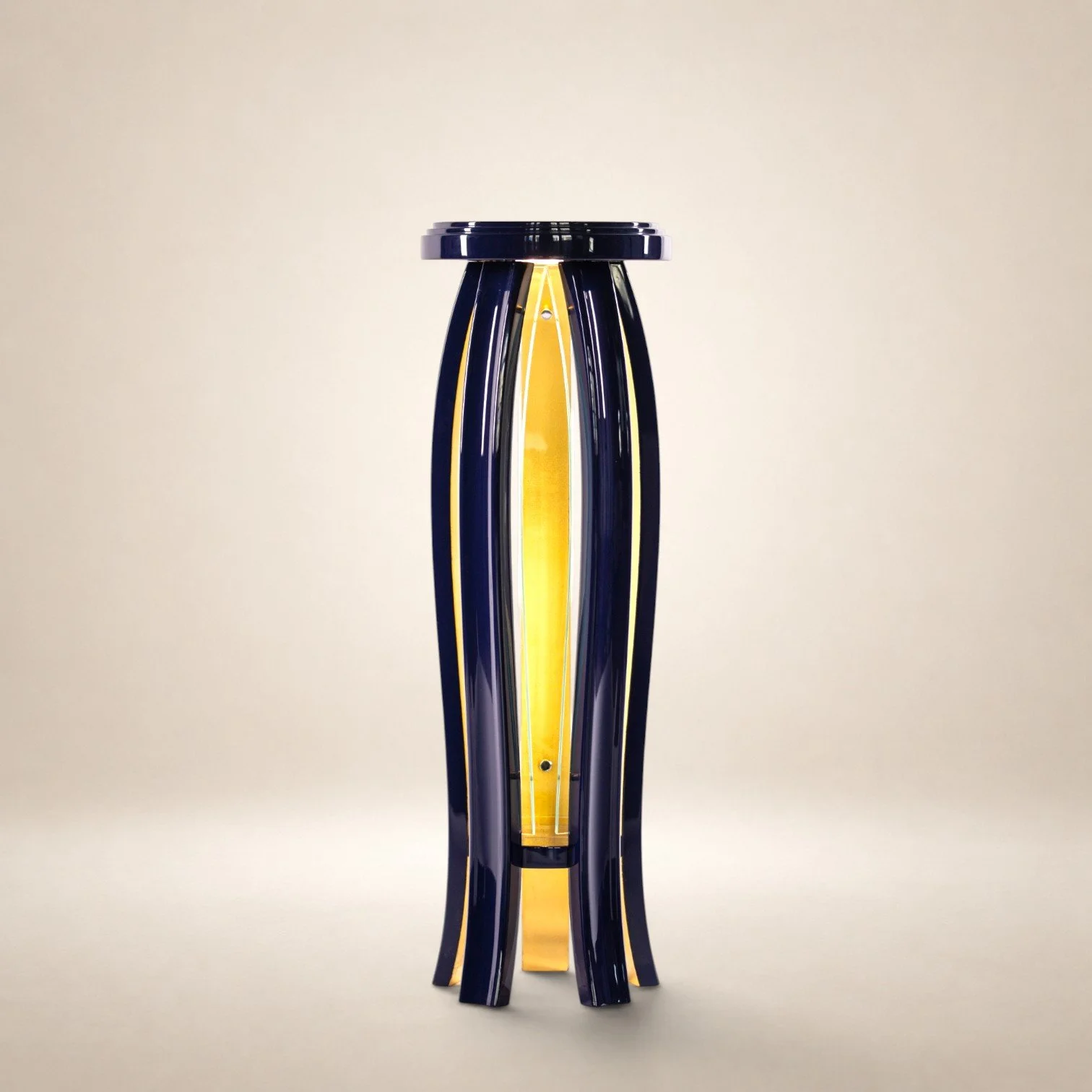
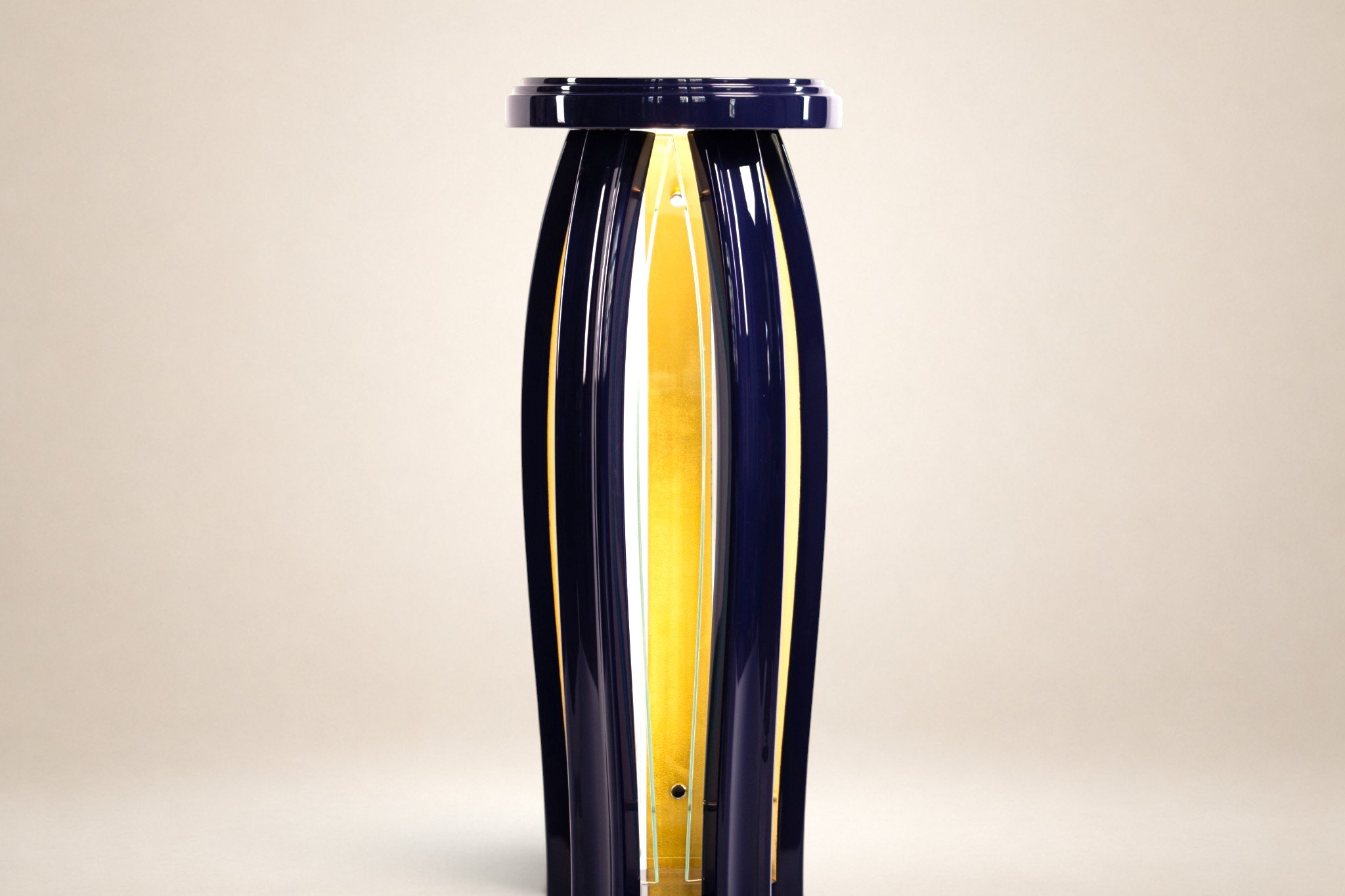
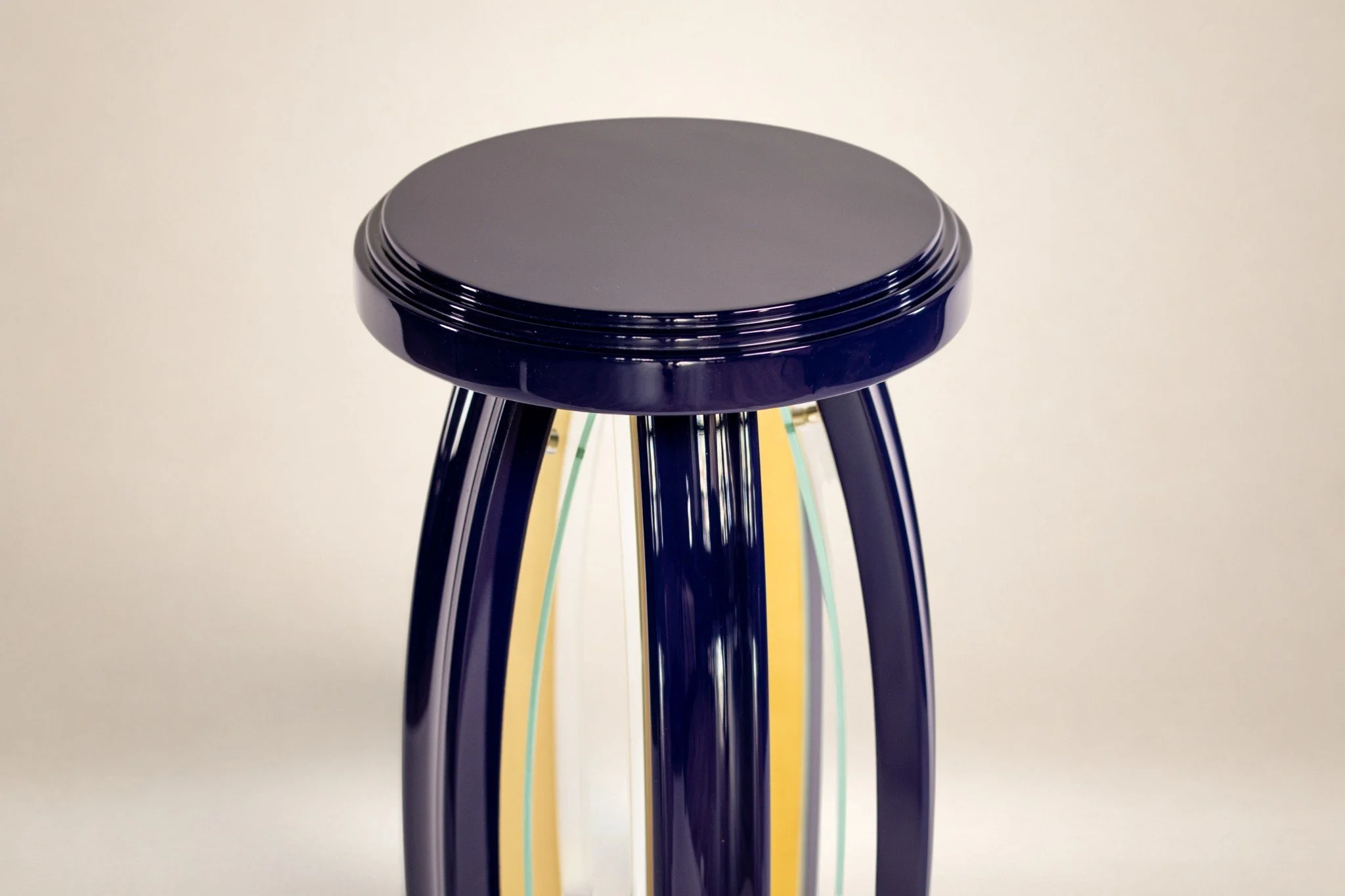
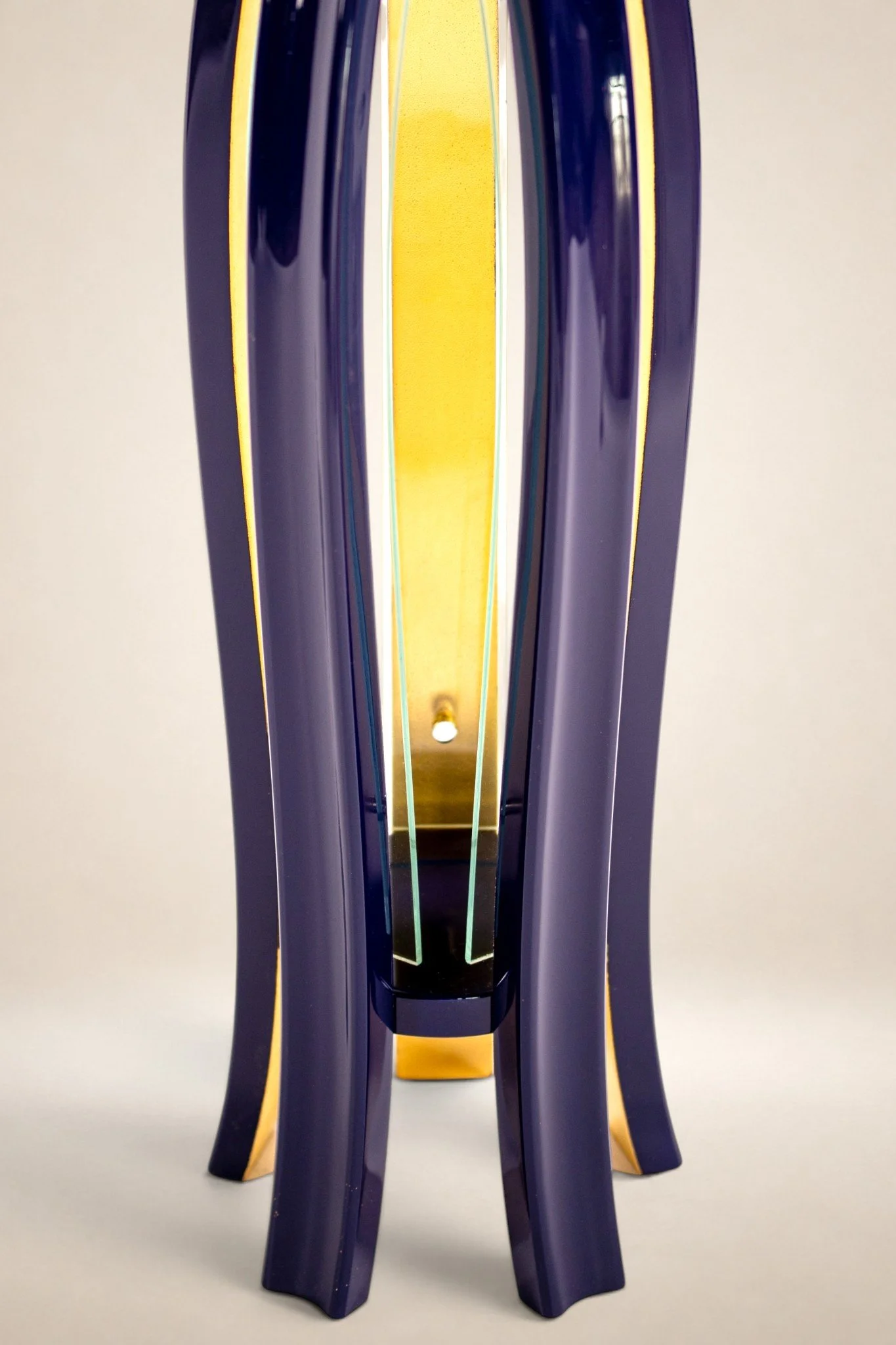
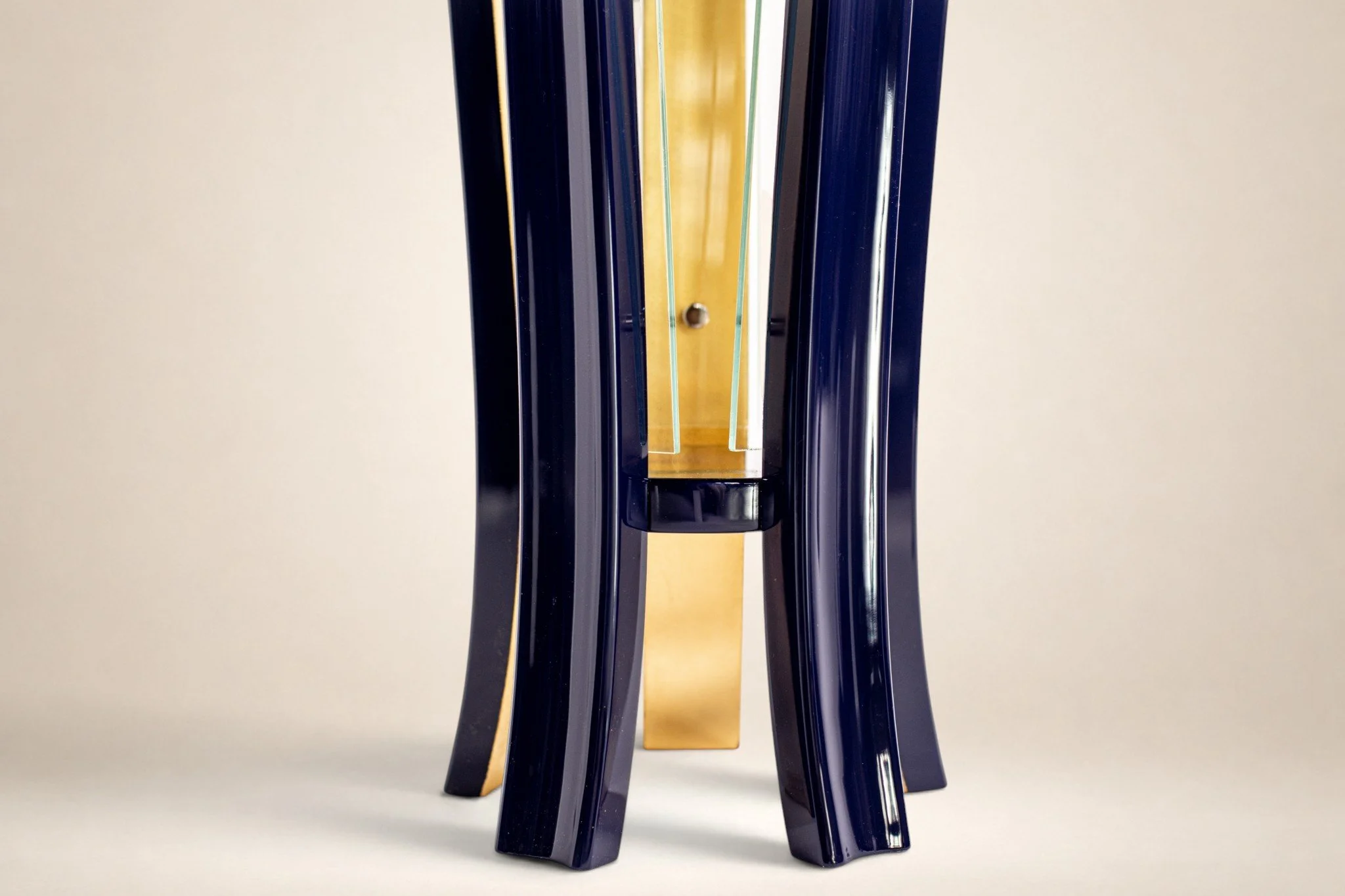
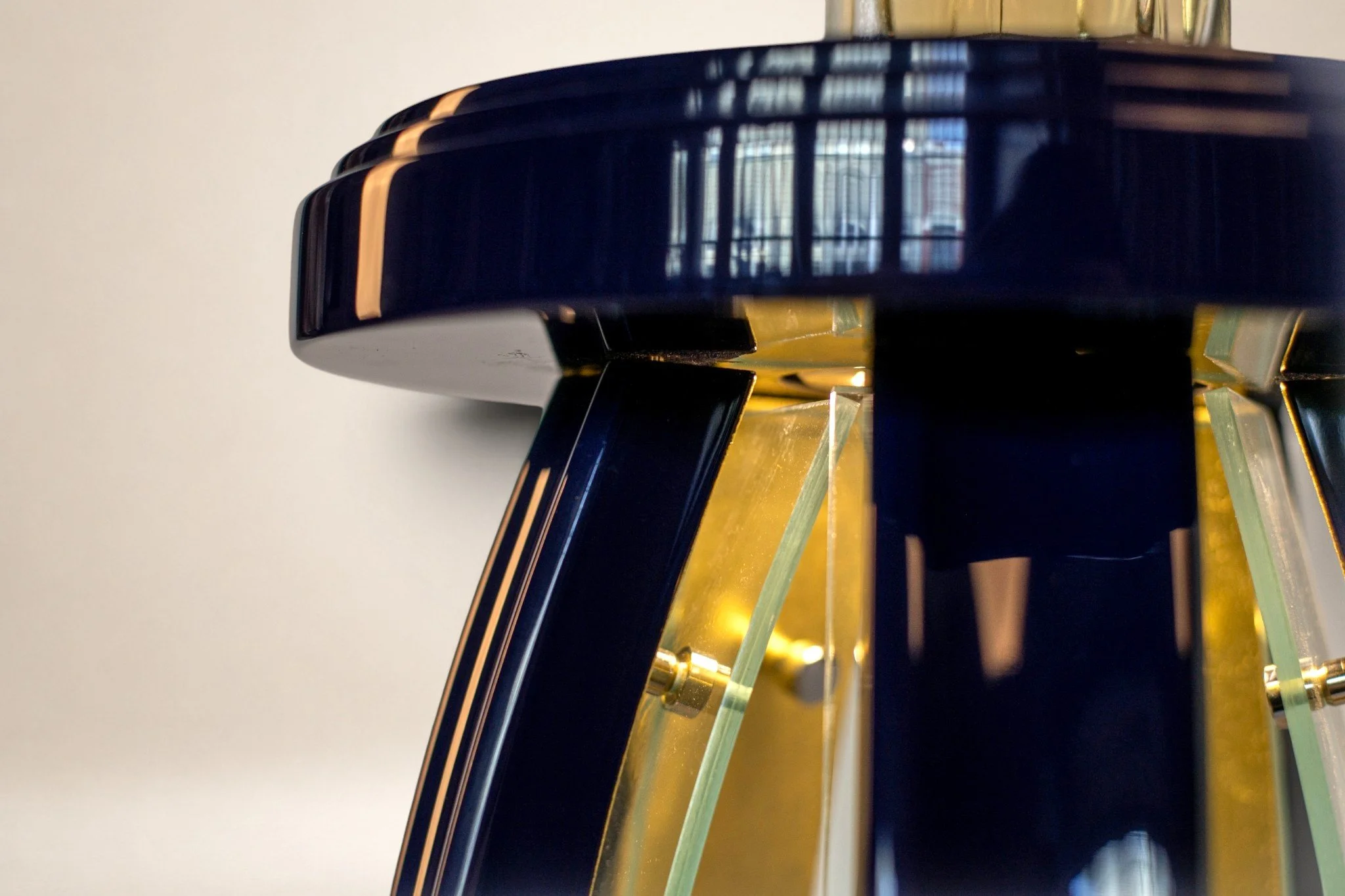
The table is built around a sculptural solid poplar framework, with individually shaped curved members forming its tall, tapered silhouette. These elements are finished in a deep, lustrous Italian 2K polyurethane, painstakingly sanded, buffed, and polished through multiple stages to achieve exceptional depth and reflectivity. The resulting surface has less in common with conventional painted furniture than with the meticulously finished bodywork of a luxury automobile.
Between the curved wooden elements are offset acrylic “glass”, deliberately positioned to introduce another layer of dimension. Their transparency allows the structure to remain visually open, while the polished edges capture and refract light as the viewer moves around the piece. Behind them, fields of genuine 24-karat gold leaf provide warmth and brilliance, appearing and disappearing through the acrylic and dark framework depending upon the viewing angle.
The contrasts are intentional: transparent against opaque, gold against deep gloss, delicate acrylic against substantial timber, and classical Art Deco influence interpreted through contemporary materials and finishing techniques. From a distance, the piece reads as a graceful sculptural silhouette. Up close, its construction and detailing reveal themselves gradually.
Although conceived as a cocktail table, its purpose is intentionally open to interpretation. It may stand beside a lounge chair holding an evening drink, occupy a sophisticated bar or salon, or serve as a sculptural pedestal for a floral arrangement, decanter, objet d’art, or other treasured piece. In the right setting, it requires nothing at all placed upon it.
That ambiguity is part of its character.
The Cocktail Table is as much an object to be displayed as it is a piece of furniture to be used; a functional sculpture born from the idea that inspiration can be found almost anywhere.