

Materials: Ebonized Maple, Italian Leather, Silver leaf, Flocking, Walnut burl veneer, Aluminum
The Gentleman’s cabinet
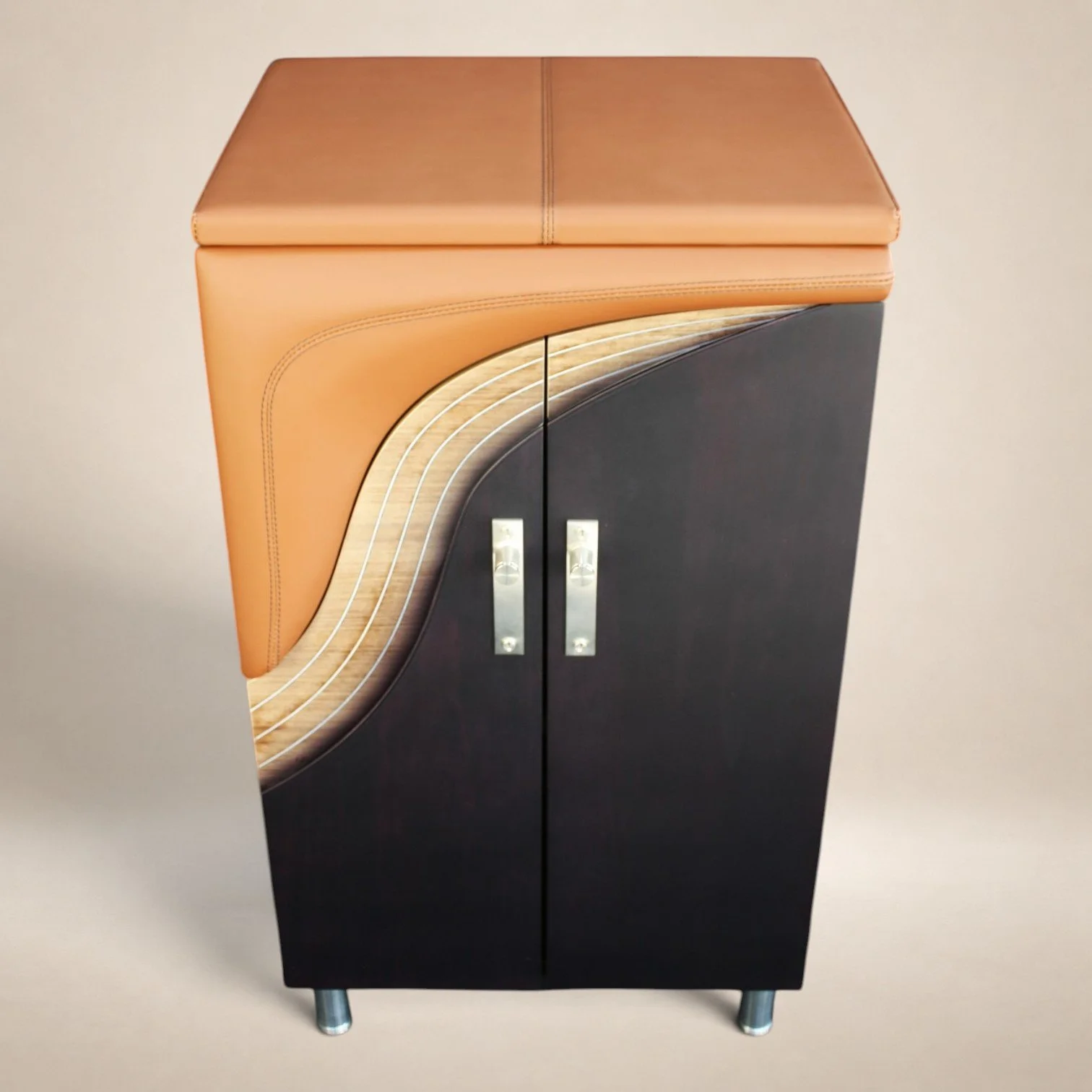
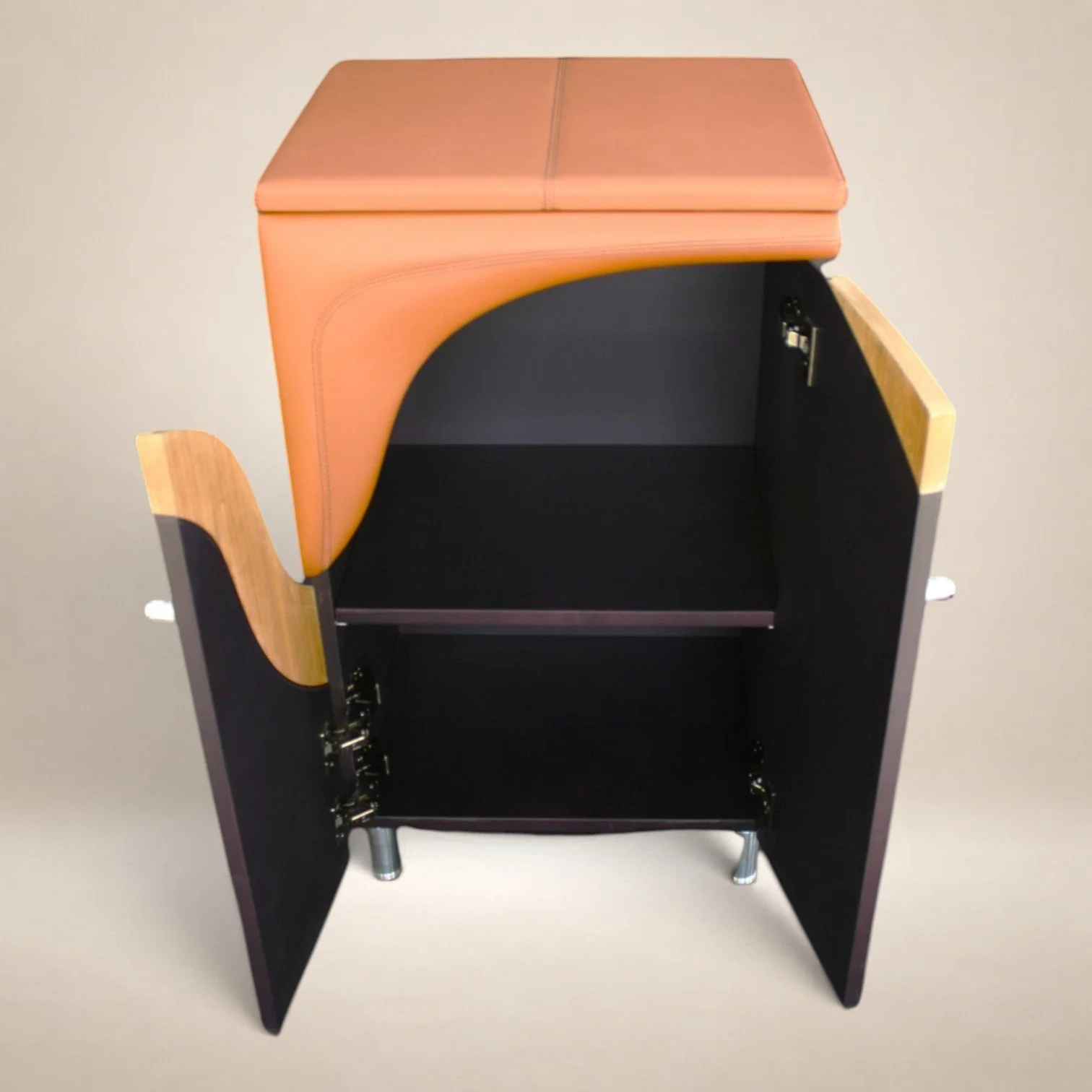
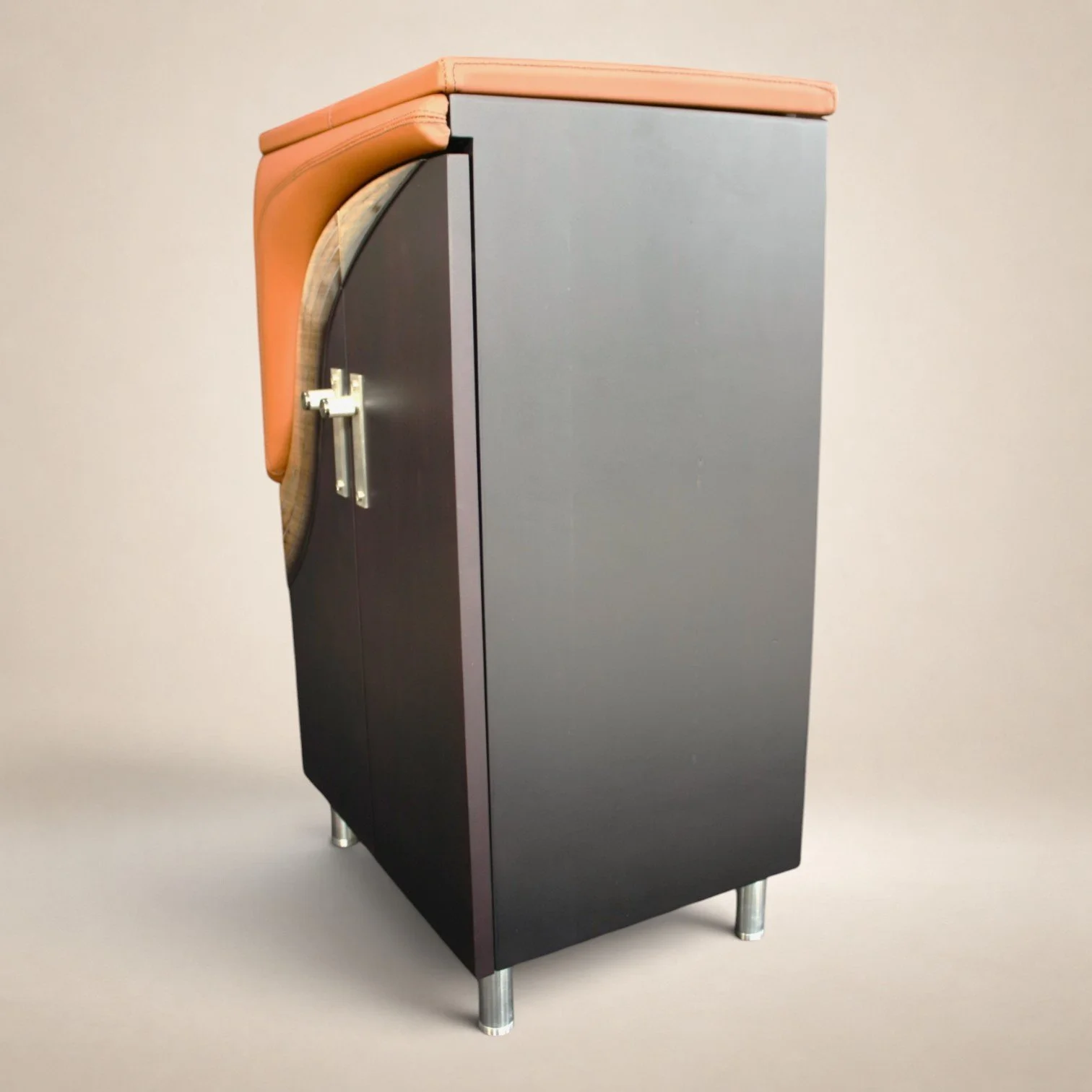
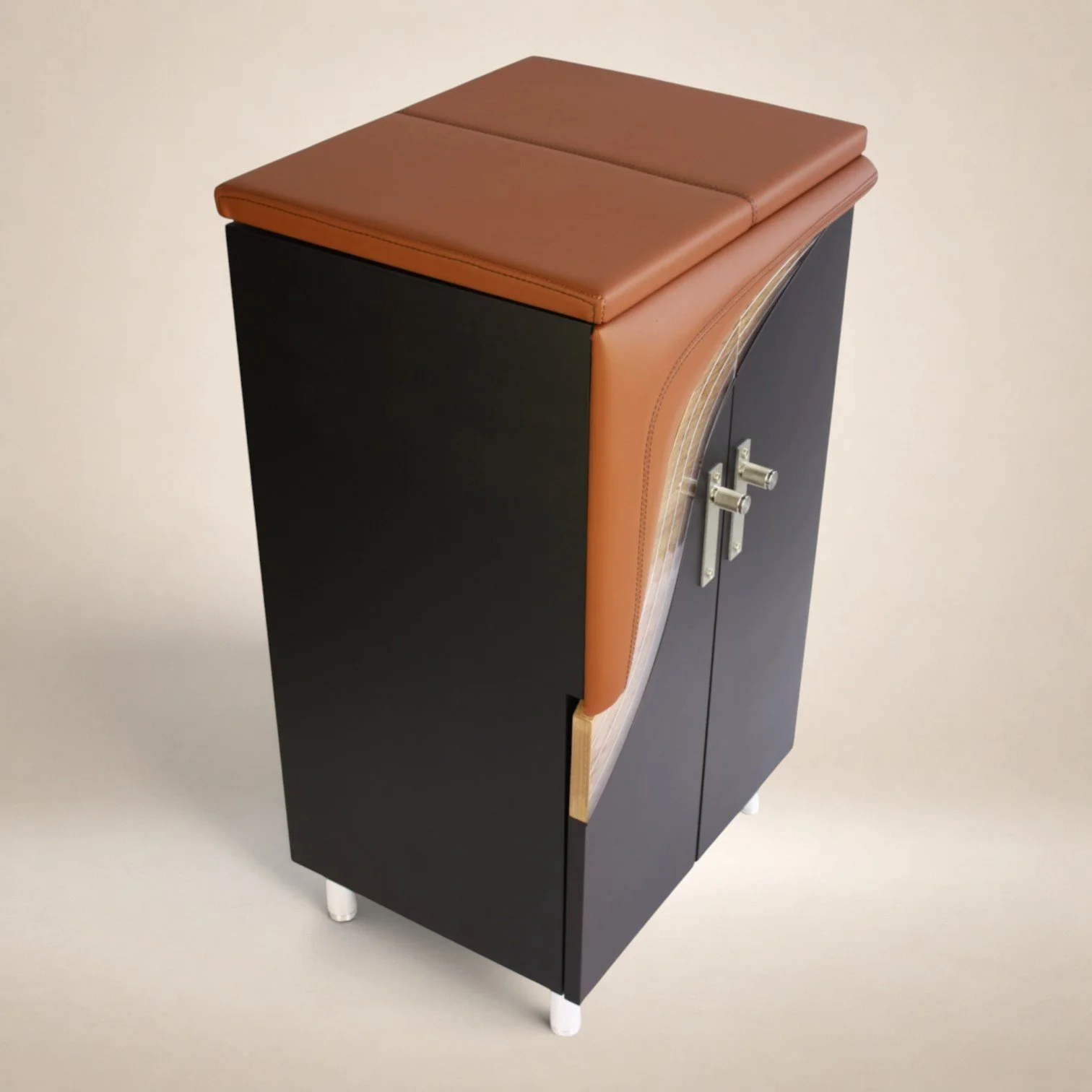
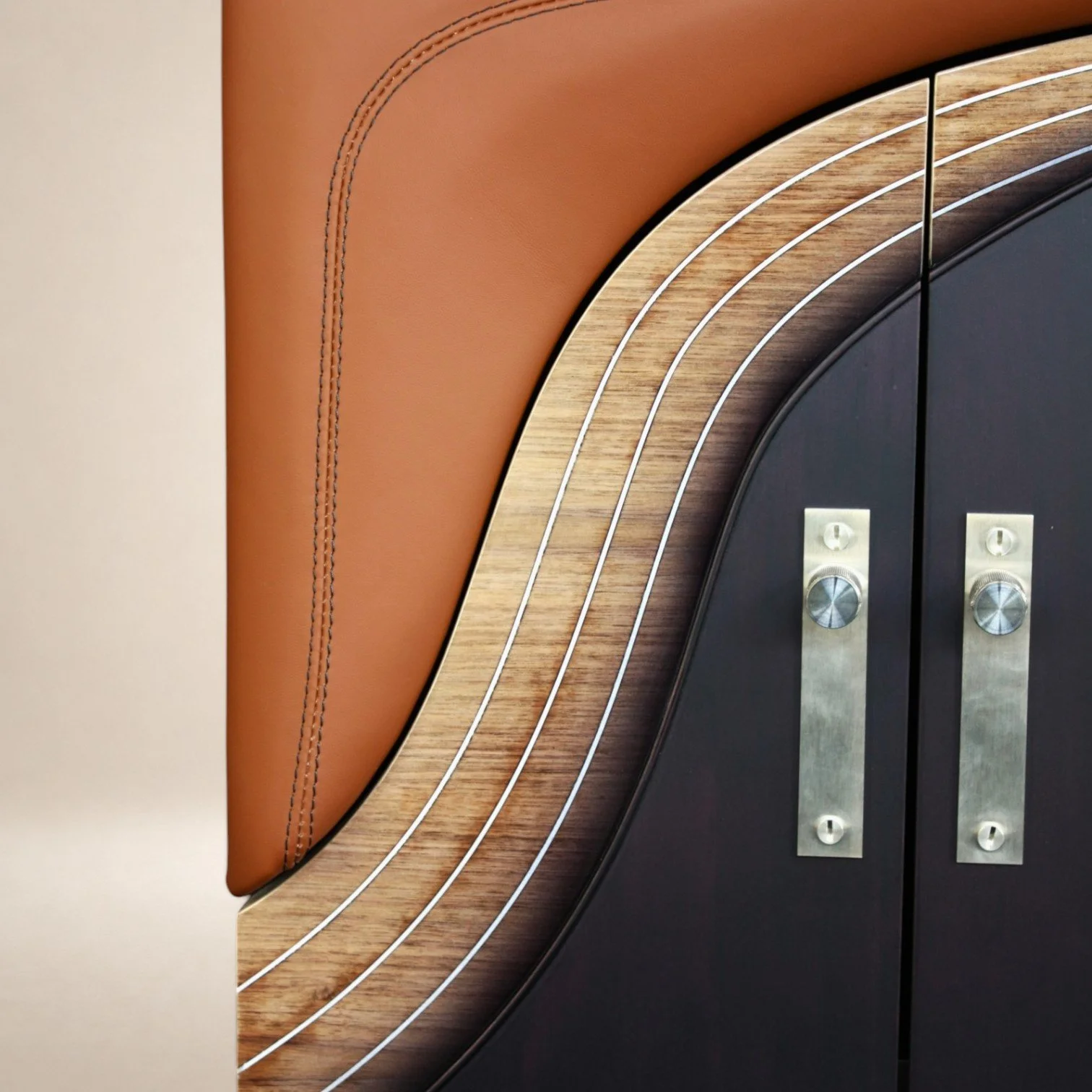
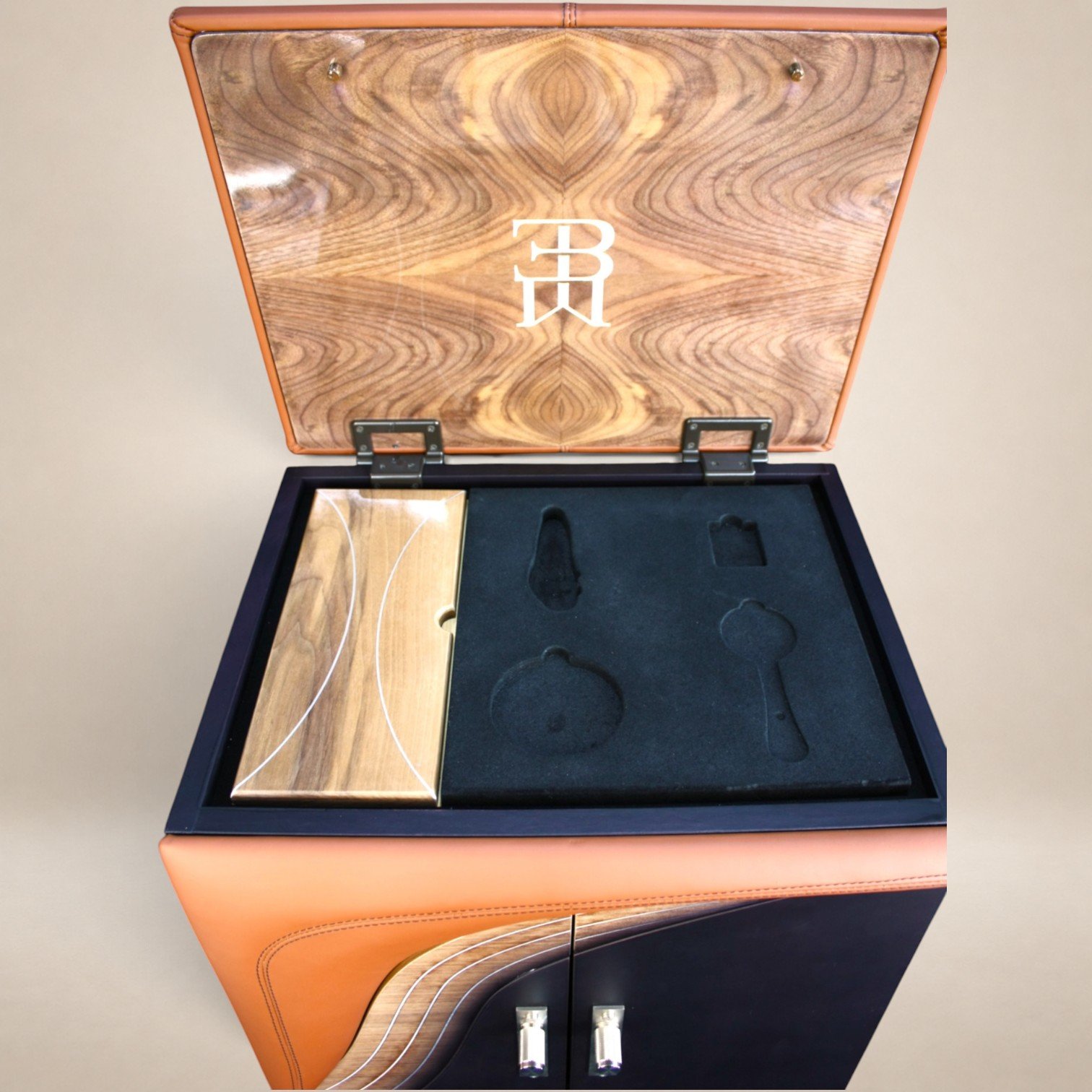
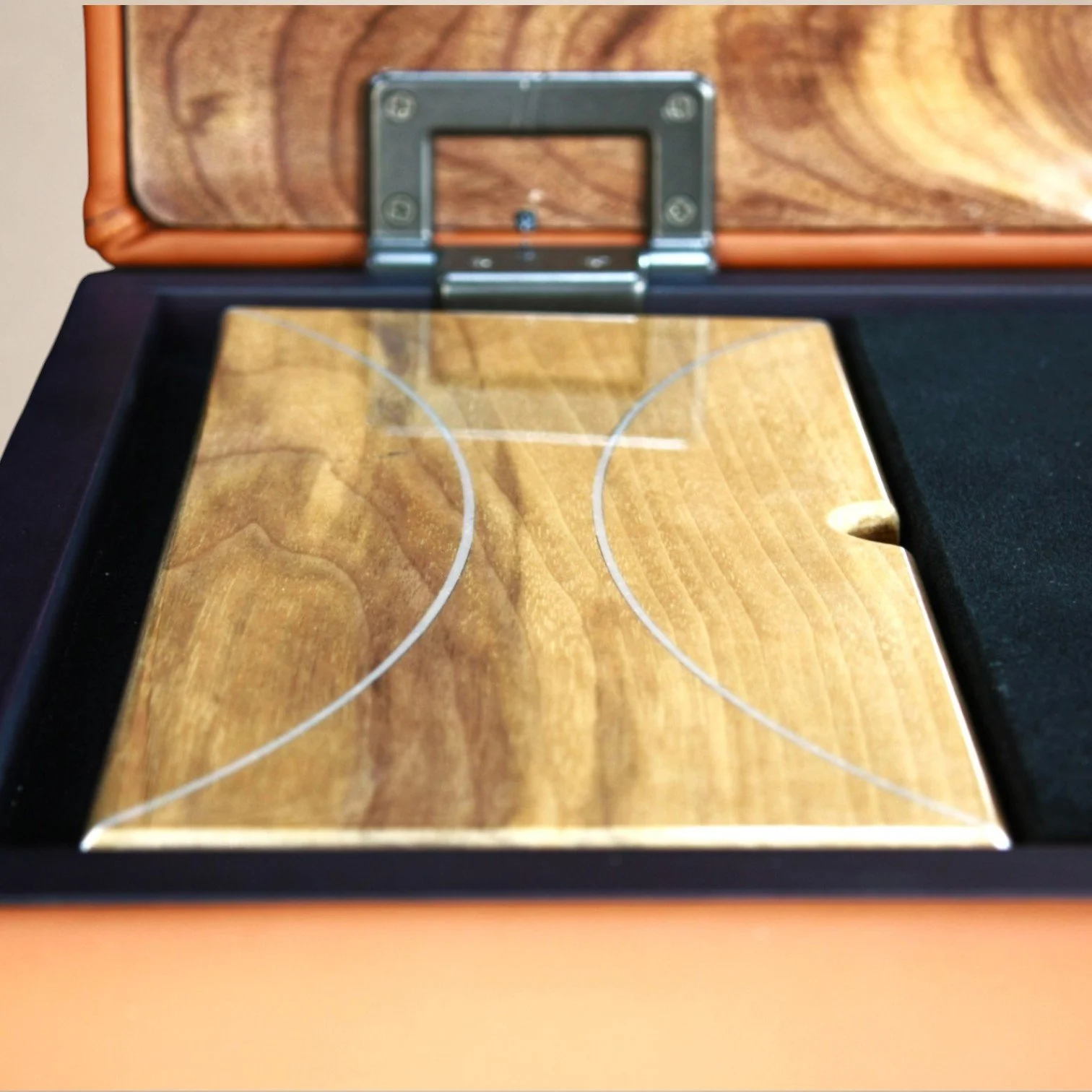
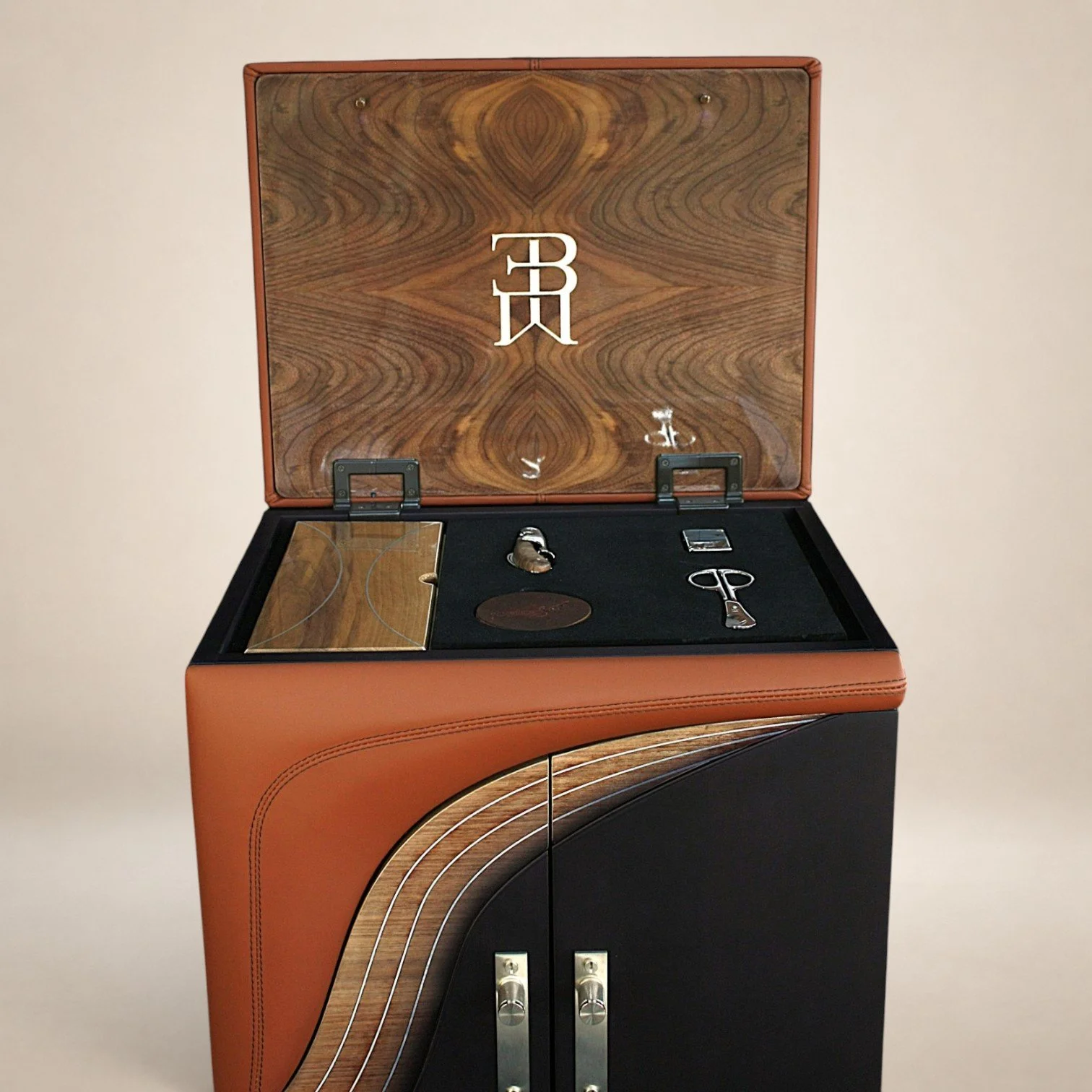
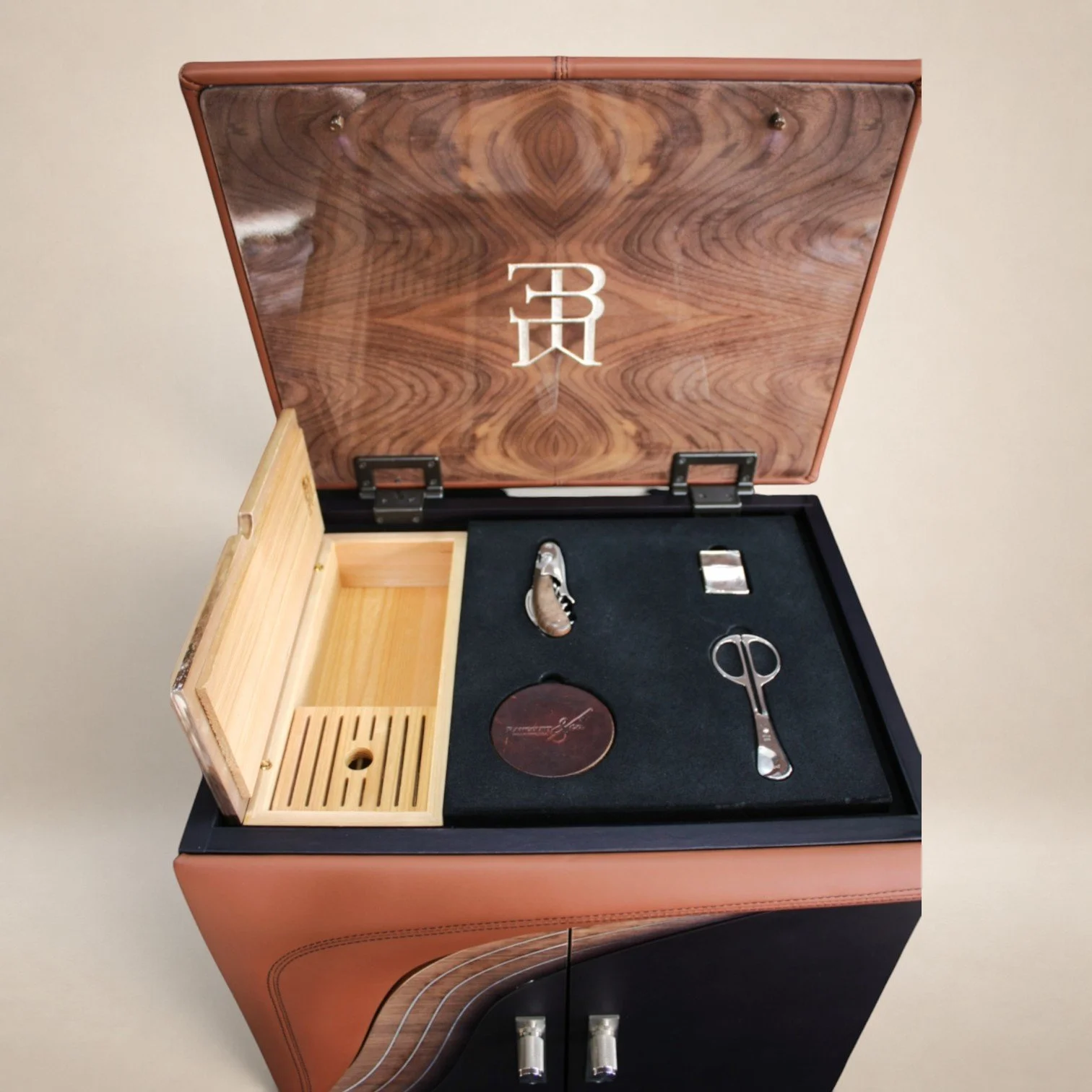
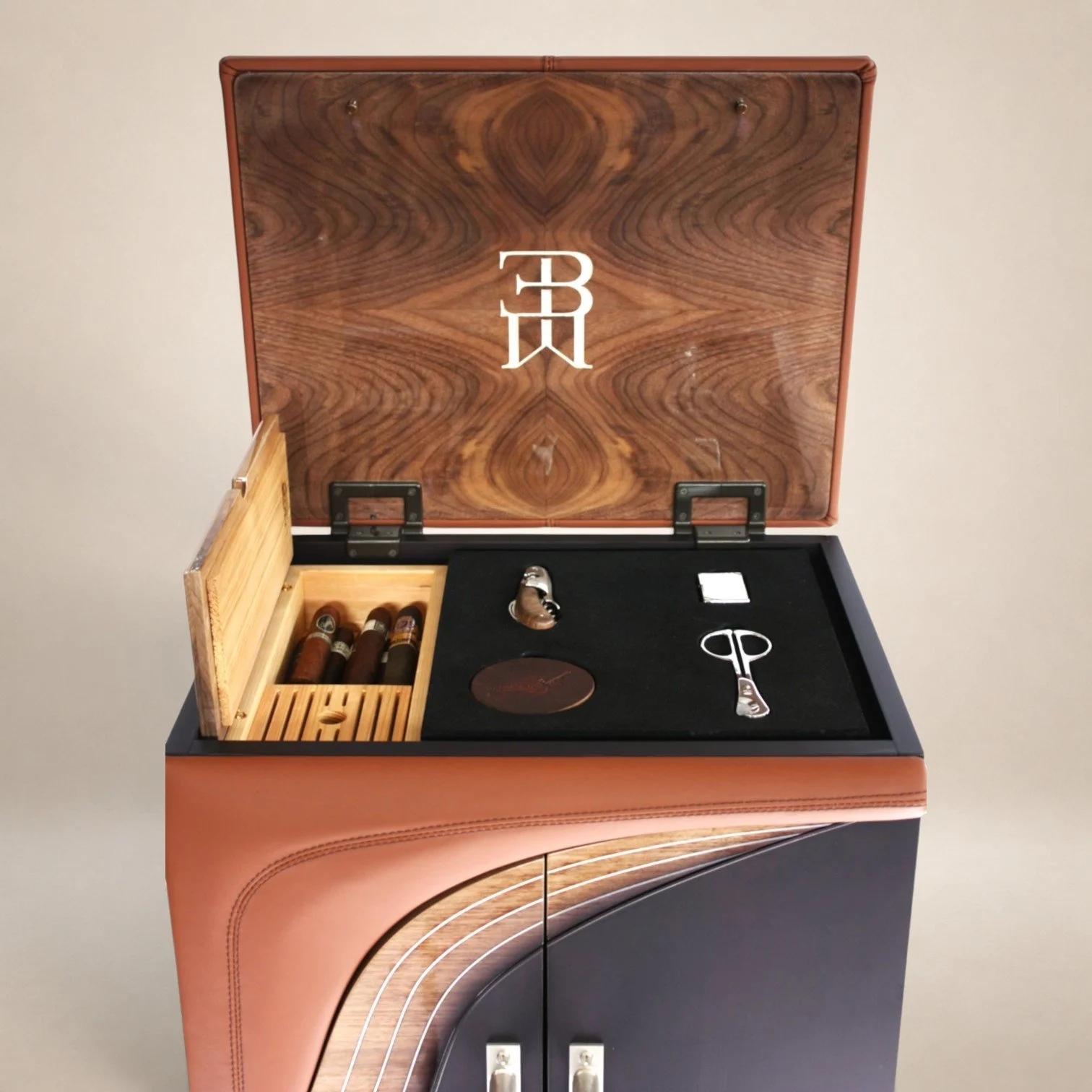
Inspired by the tailored interiors of grand touring automobiles, this cabinet explores the intersection of fine furniture, coachwork, and personal ritual. Its sweeping lines, contrasting surfaces, and meticulously stitched leather were conceived with the same philosophy found inside a bespoke motorcar: every material should feel deliberate, every transition considered, and every detail rewarding upon closer inspection.The exterior is built around ebonized maple in a restrained, low sheen finish, providing a quiet backdrop for the more expressive materials surrounding it. Across the front, a sculpted field of walnut follows a broad, flowing curve reminiscent of an automotive body line. Fine aluminum inlays trace that movement, catching the light like the brightwork of a classic automobile and emphasizing the cabinet's asymmetrical geometry, while machined aluminum feet give the piece a distinctly engineered foundation.The cabinet is wrapped in supple Italian leather, tailored around its contours rather than simply applied to them. Double rows of French stitching follow the sweeping profile of the cabinet, reinforcing the automotive influence and bringing a level of detail normally associated with hand-finished upholstery and bespoke interiors. The warm saddle tone of the leather provides a deliberate counterpoint to the nearly black maple; a juxtaposition of softness and structure, warmth and precision.Opening the upper compartment reveals an entirely different experience. Beneath the leather-trimmed lid is a dramatic high-gloss walnut burl interior, bookmatched to create an almost kaleidoscopic pattern. The polished surface contrasts sharply with the understated sheen of the exterior, turning the act of opening the cabinet into a reveal. Integrated within is a dedicated cedar cigar humidor, accompanied by fitted storage for the tools and accessories associated with the ritual of enjoying a fine cigar.Even the interior cabinetry continues the philosophy of contrast. The dark, disciplined exterior gives way to carefully finished internal spaces, while the curved walnut and metallic detailing visible on the doors continues through the composition rather than functioning as decoration applied afterward.More than storage, the cabinet was conceived as a personal luxury object; part humidor, part gentleman's cabinet, and part piece of functional sculpture. Its references to automotive design are intentionally subtle. There are no literal grilles, gauges, or badges. Instead, the influence is expressed through proportion, upholstery, stitching, polished metal, sweeping lines, and the tactile relationship between leather, wood, and aluminum.It is furniture approached with the sensibility of a coachbuilder: crafted not simply to be looked at, but to be discovered.