
Materials: Italian leather, Walnut, Aluminum, Madagascar ebony veneer, Alcantara, MDF, Flocking, Epoxy, Silver leaf
Excelsior Bar Cabinet
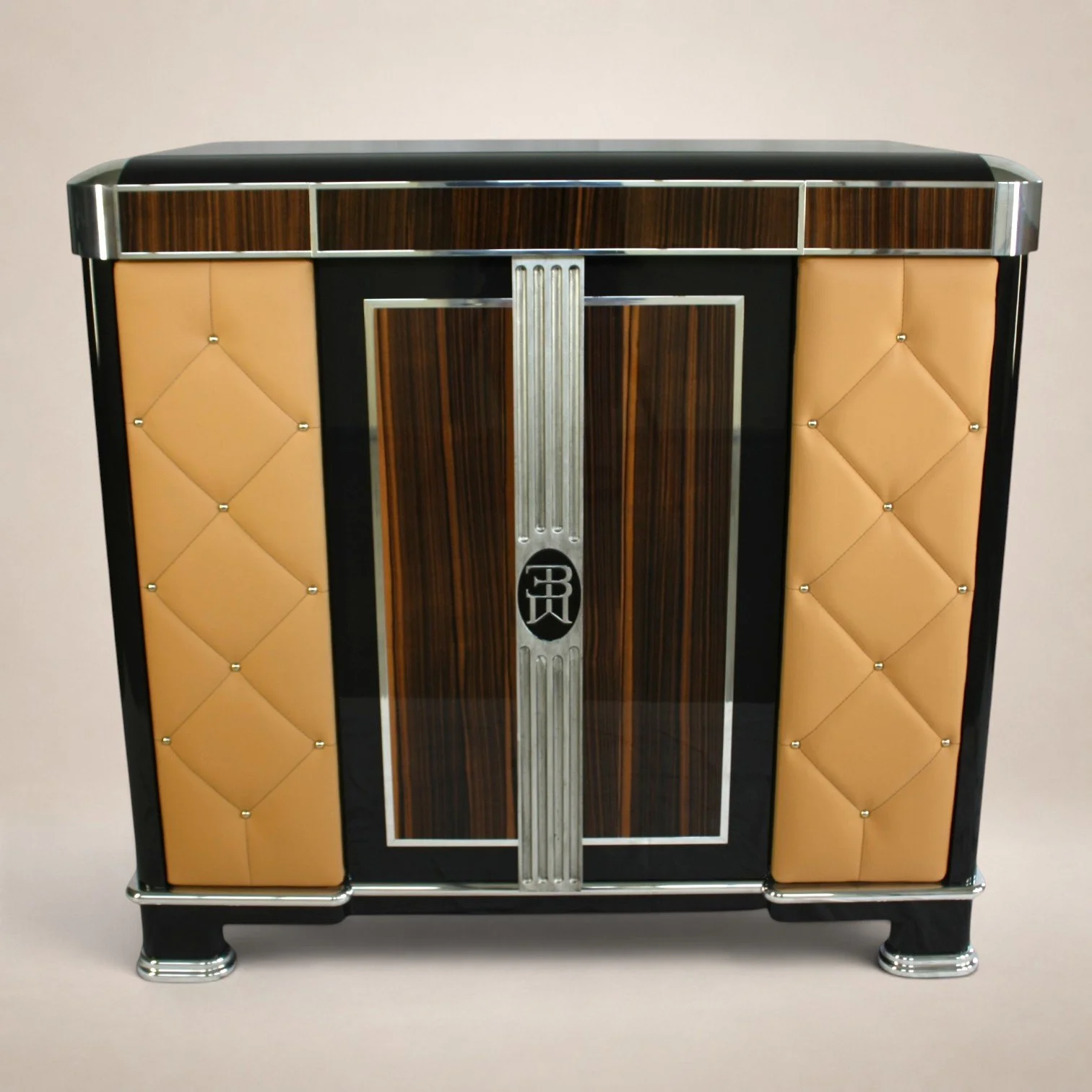
An Art Deco bar cabinet inspired by the precision, material richness, and quiet extravagance of a coachbuilt Rolls-Royce.

The Excelsior Cabinet began with an automobile.

More specifically, it was inspired by the way a Rolls-Royce approaches luxury, not through ornament for ornament’s sake, but through precision, proportion, tactile materials, and details that reveal themselves gradually. The goal was never to reproduce an automobile in furniture form. Rather, the Excelsior borrows from the language of coachbuilding: polished metal against deep lacquer, hand-finished leather beside figured wood, carefully controlled reflections, and mechanical details treated with the same importance as the exterior form.

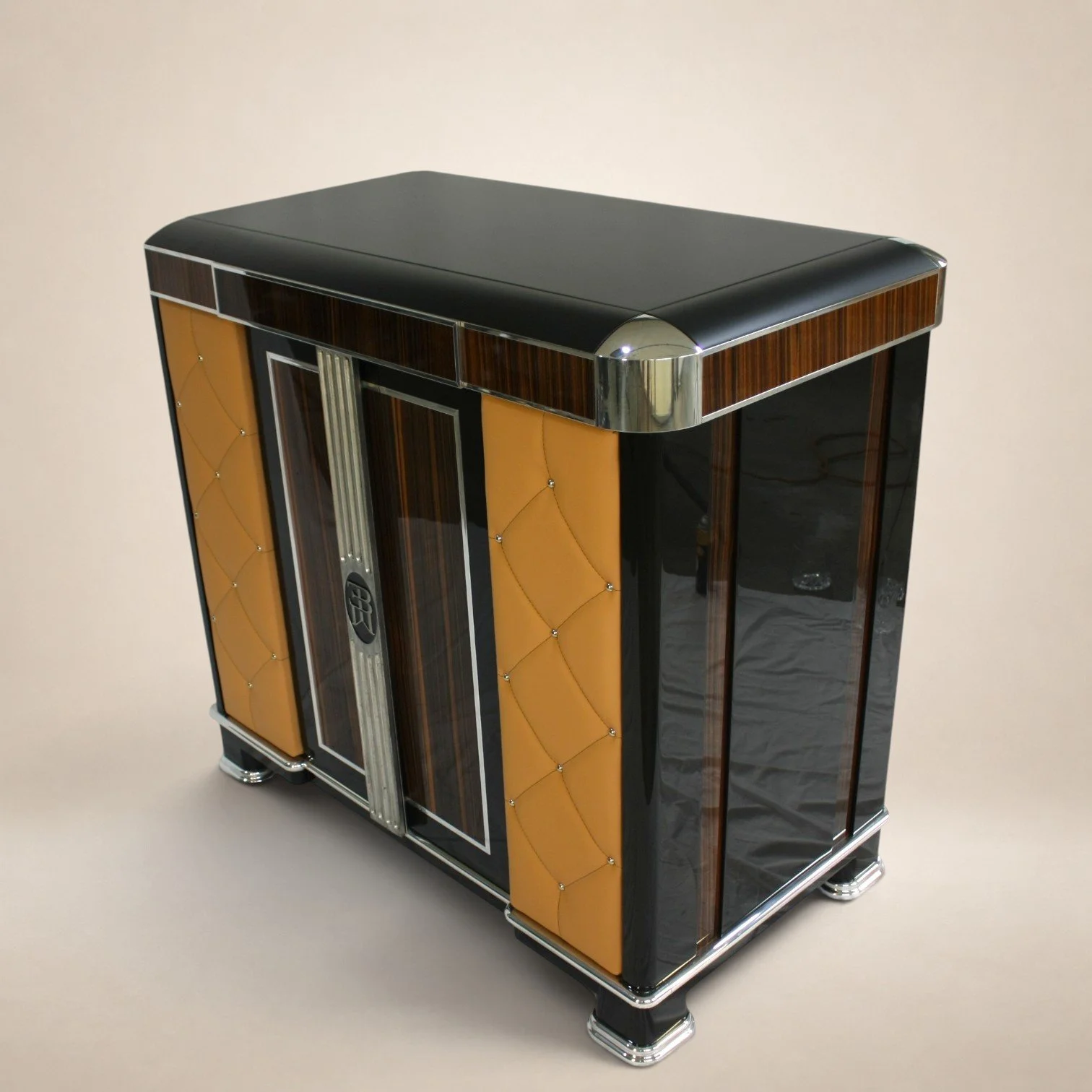
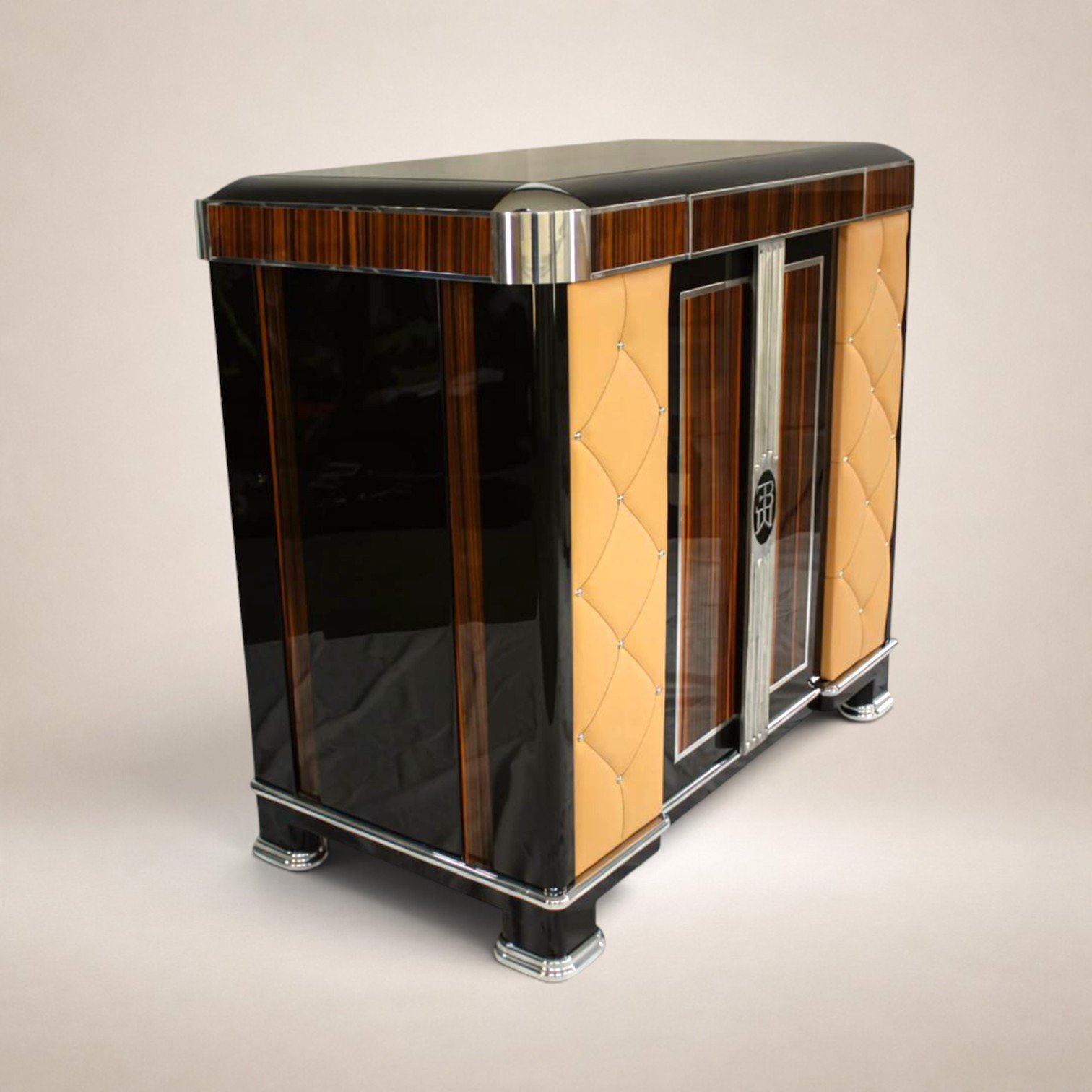
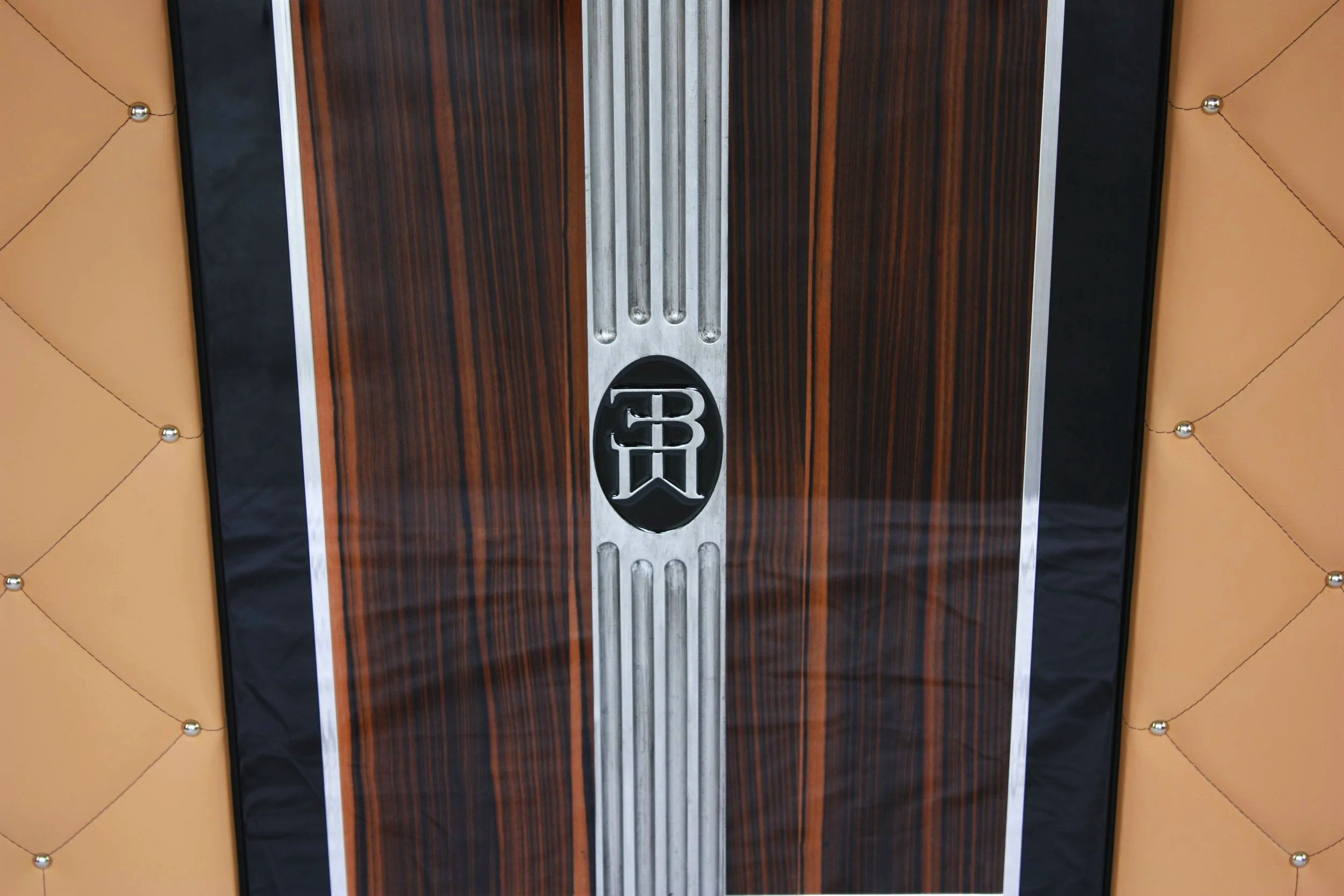
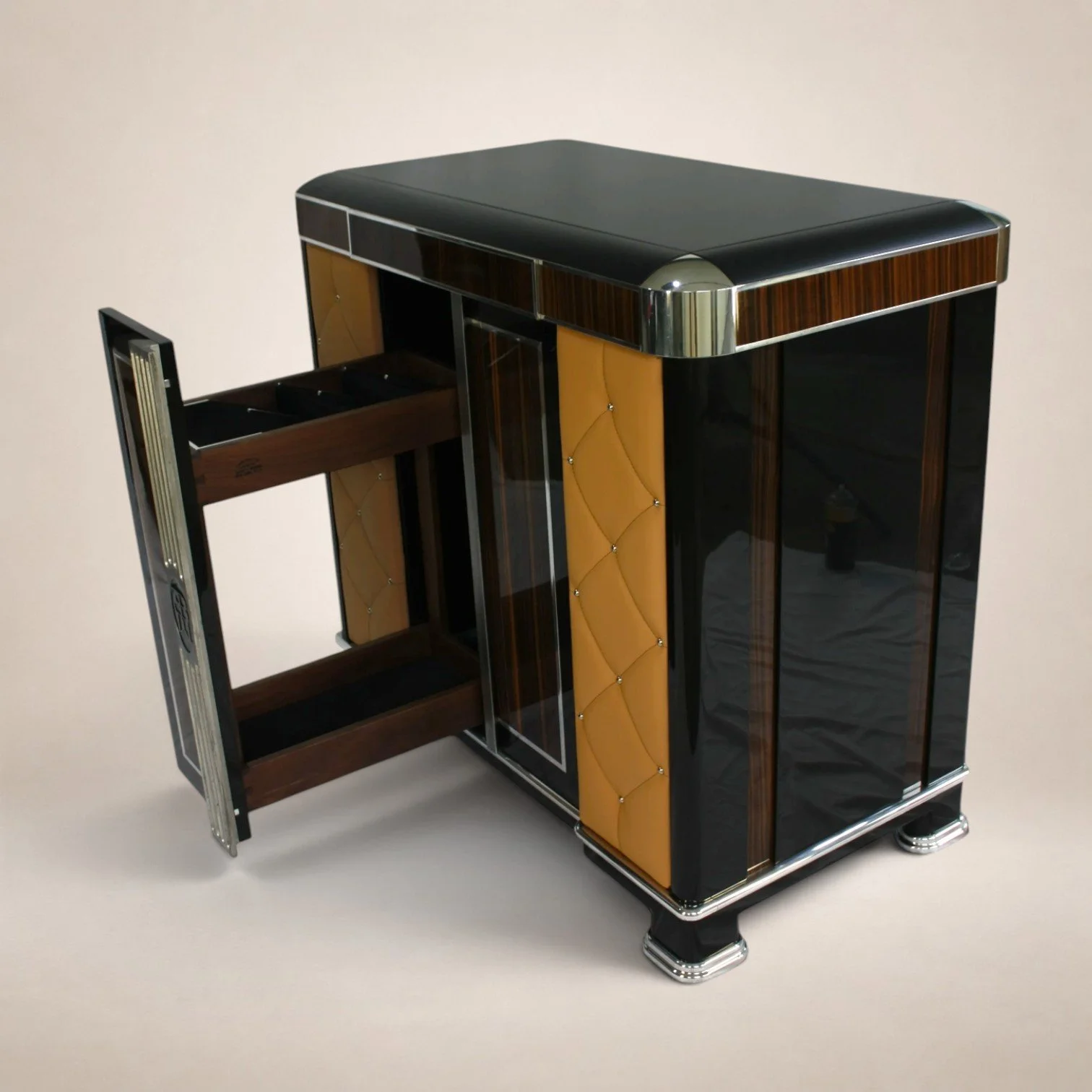
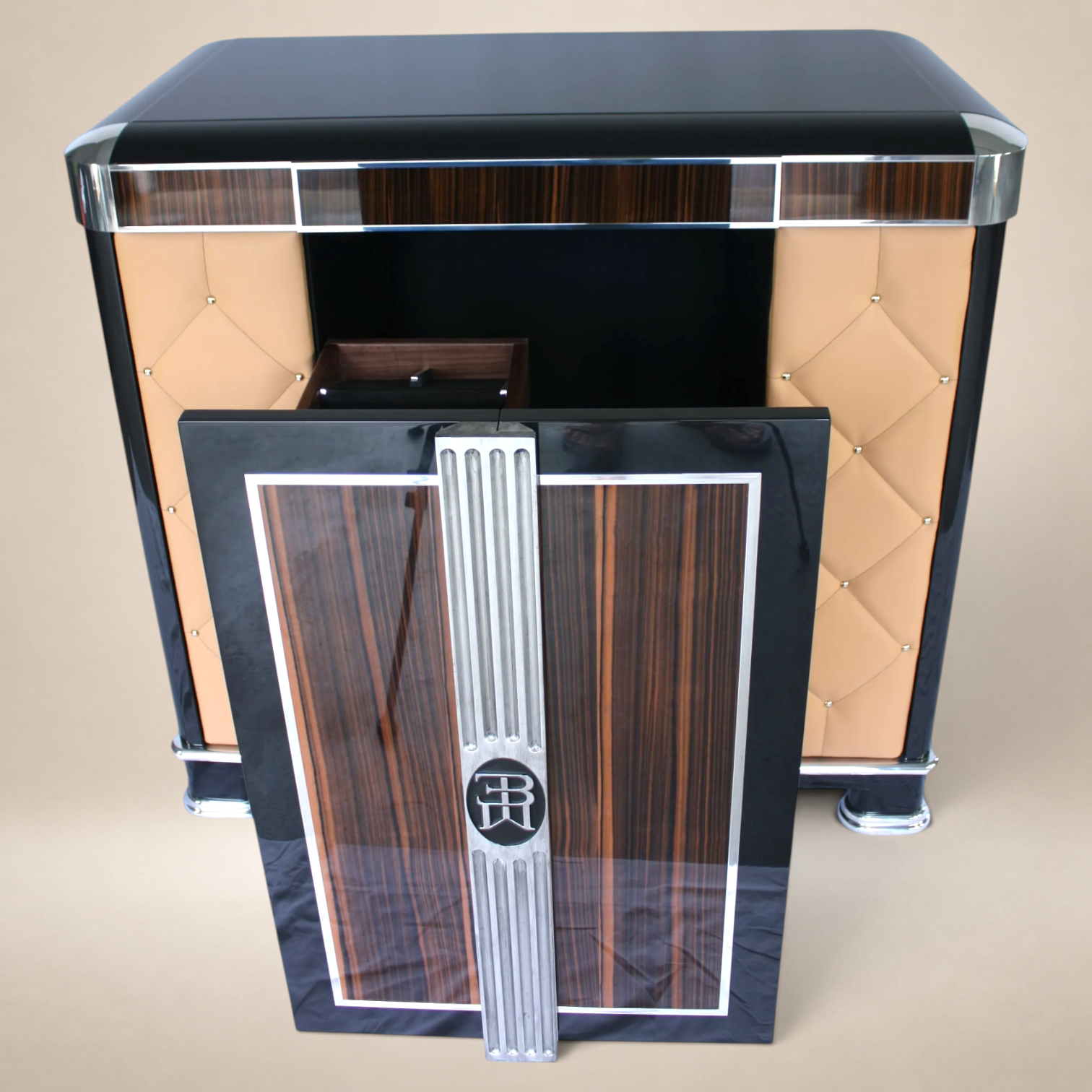
Its Art Deco influence is unmistakable. Strong vertical lines, restrained geometry, polished billet aluminum, and richly figured Madagascar ebony veneer give the cabinet an architectural presence. Hand-worked Italian leather softens those harder elements, creating a deliberate tension between precision and comfort.

Much of the Excelsior's character comes from contrast.

The cabinet’s highly polished surfaces are finished in Italian 2K polyurethane, sanded, buffed, and polished to produce the deep, almost liquid appearance associated with exceptionally fine automotive finishes. Against that gloss sits the intentionally flat black top. The juxtaposition of the two finishes is subtle from across a room, but pronounced as you approach the piece: light moves across the polished surfaces while the top absorbs it, allowing the silhouette of the cabinet to remain unusually crisp.

Polished aluminum provides another layer of contrast. Rather than functioning merely as decorative trim, the metal establishes many of the cabinet’s lines and gives the piece its distinctly mechanical character. At the center, a silver-leaf pull introduces something different again; a hand-finished surface with a softer, less perfect character than the surrounding polished metal.

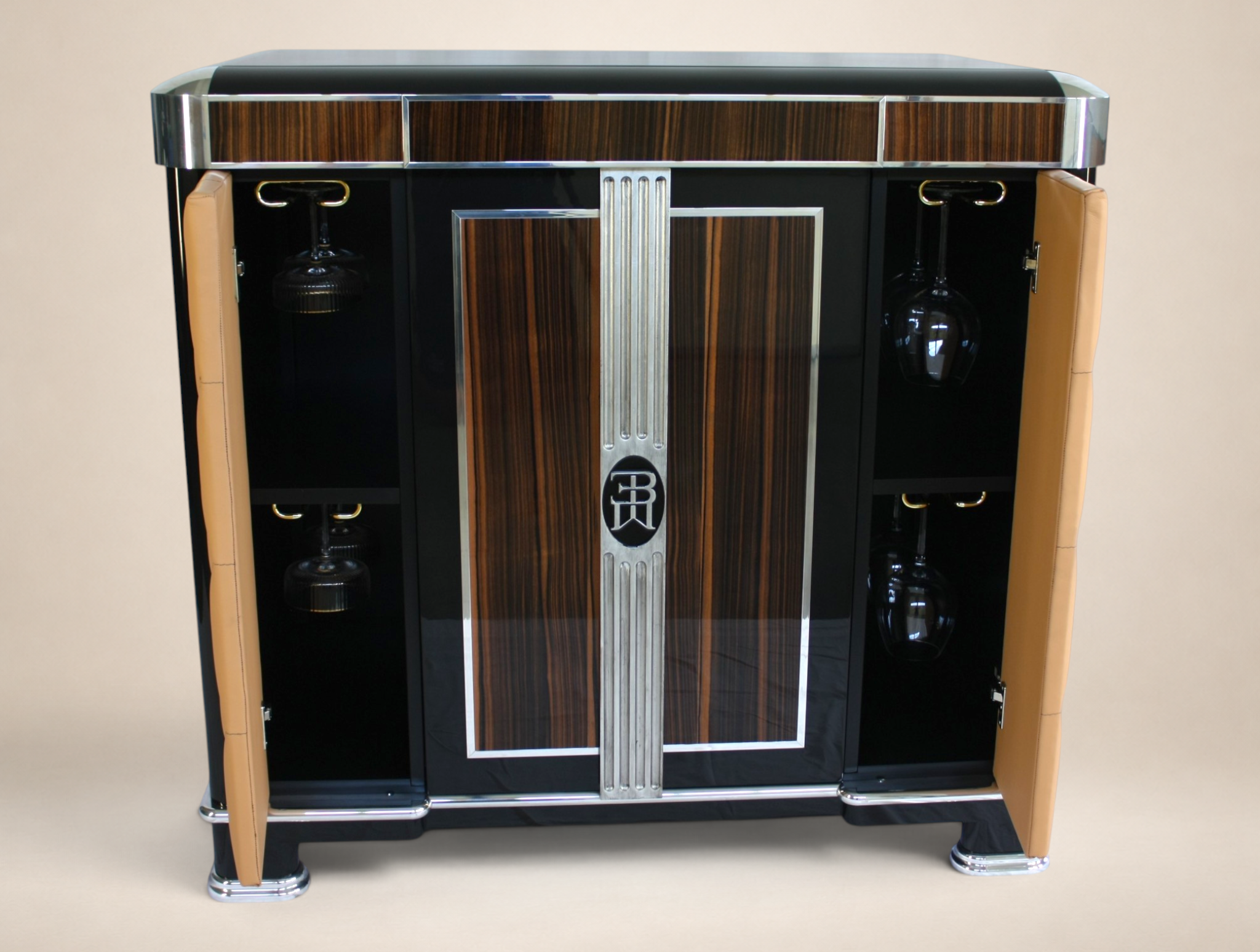
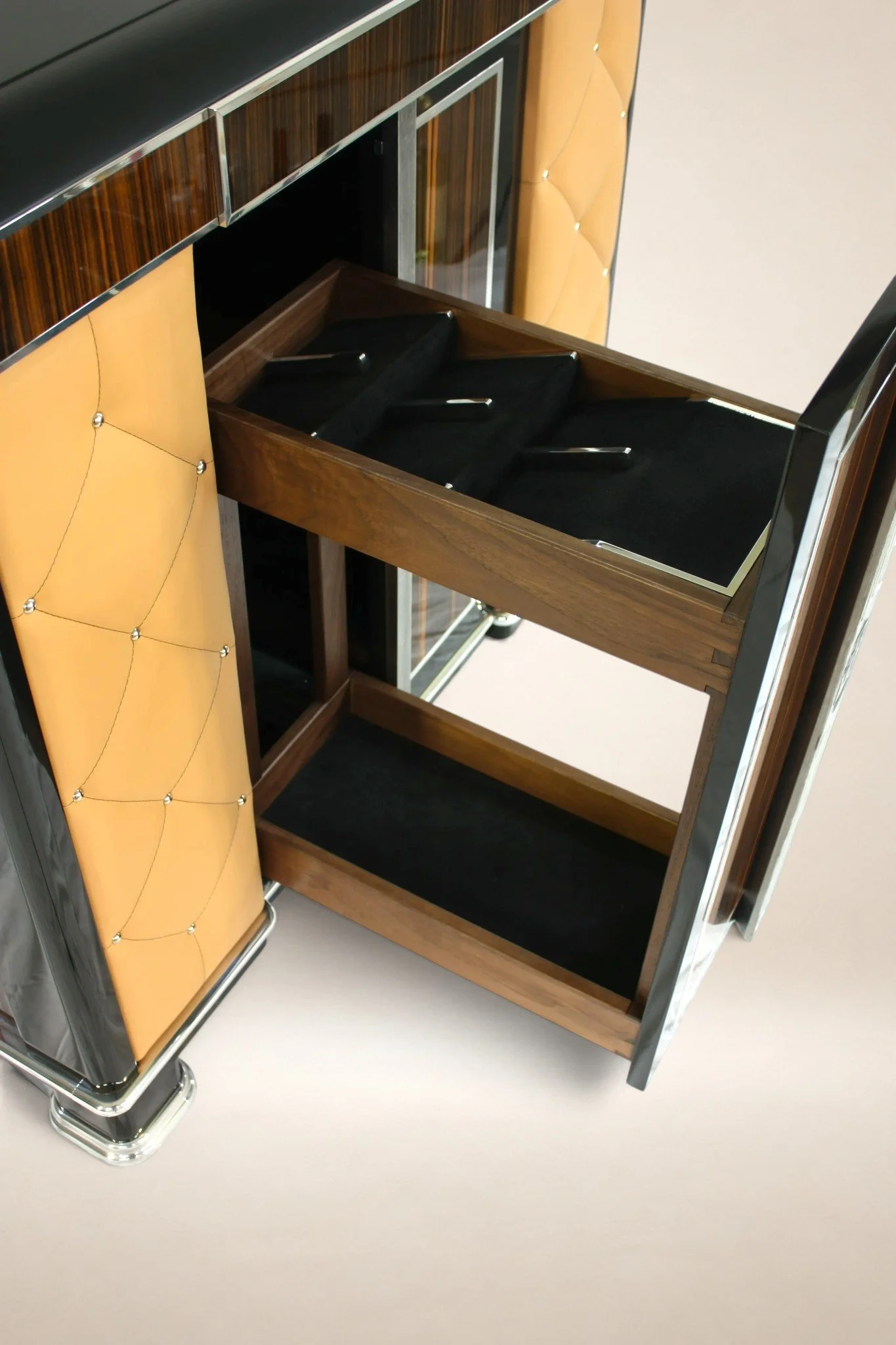
Opening the Excelsior reveals an interior designed with the same attention to detail as its exterior.

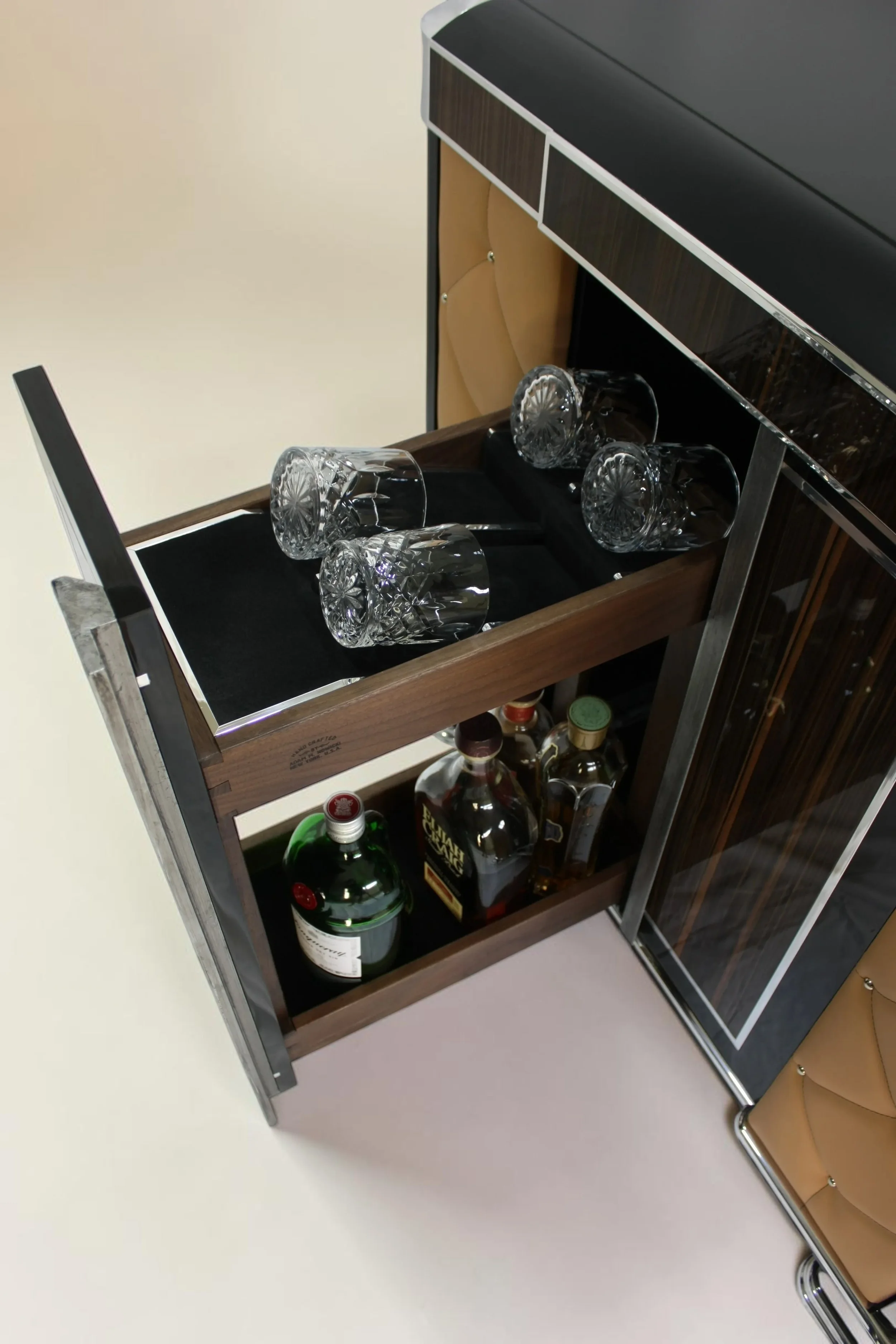
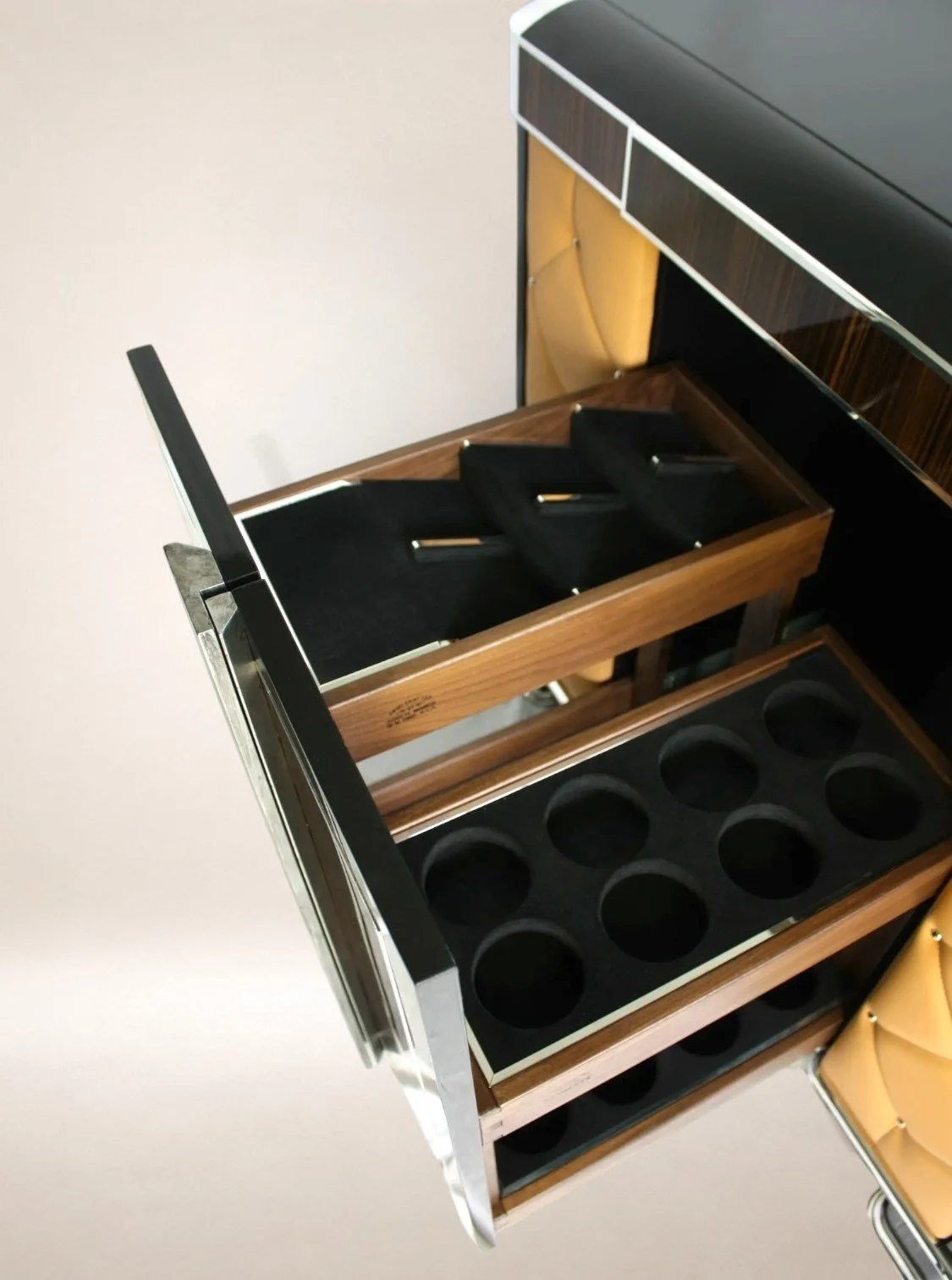
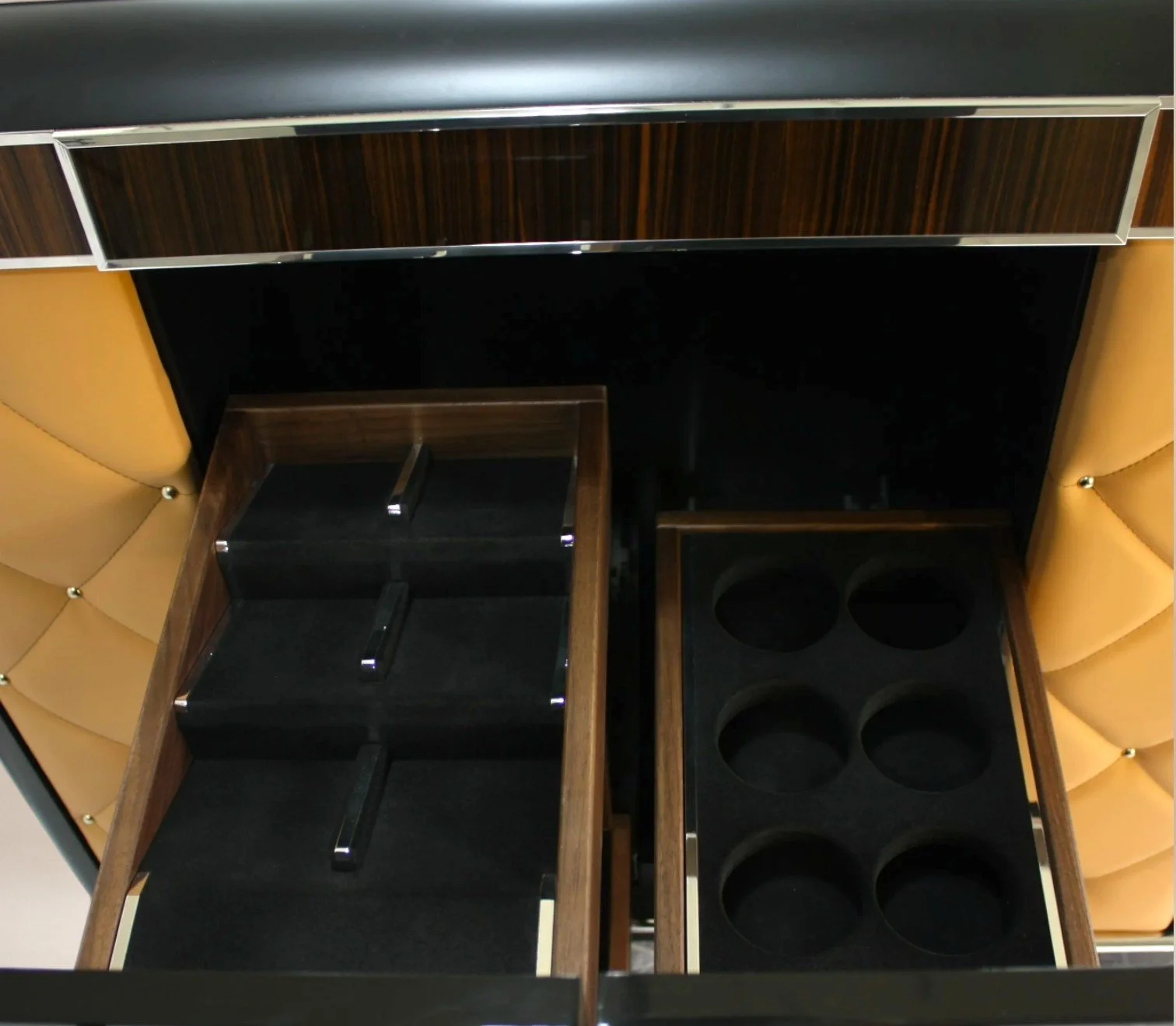
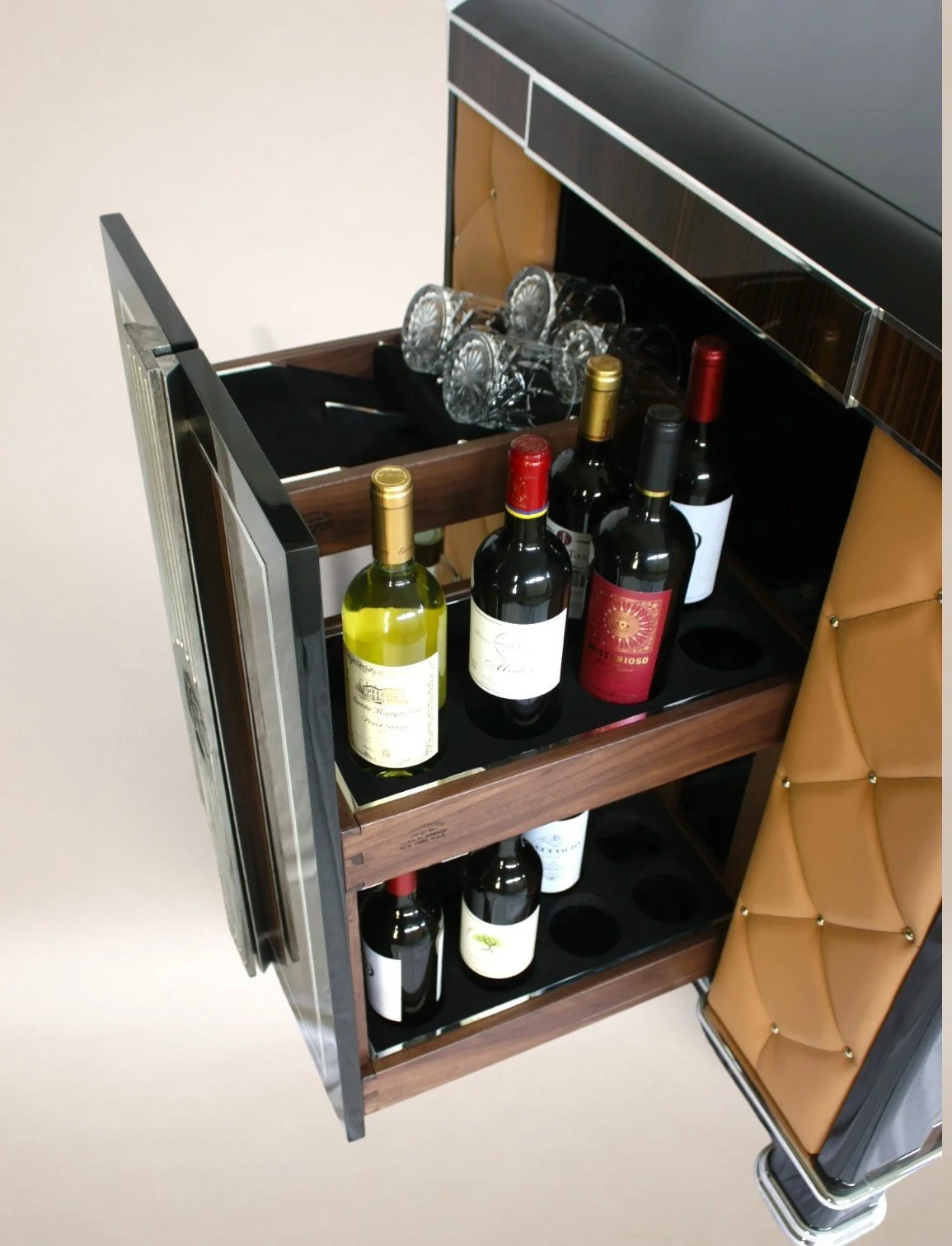
Structural and storage components are fabricated from walnut, providing warmth against the black and metallic exterior. Pull-out storage accommodates 16 standard bottles of wine, plus space for a decanter or oversized bottles, while dedicated spaces hold six whisky glasses and up to sixteen wine or martini glasses. The arrangement was designed so the cabinet functions as a serious bar without letting that function dictate its appearance when closed.

Some of its most considered details are also among the least visible.

Interior surfaces are flocked, eliminating the hard, unfinished feeling often found inside cabinetry. Drawer bottoms are lined in Alcantara, chosen not simply for appearance, but for its tactile quality and its ability to quietly cushion the objects placed upon it. Walnut, flocking, Alcantara, leather, ebony, aluminum, silver leaf, high-gloss lacquer, and matte black all occupy the same piece, yet each material has been given a distinct purpose.

That is ultimately what defines the Excelsior Cabinet.

It is a piece designed to be appreciated first from across the room and then again from inches away. From a distance, it reads as a bold Art Deco composition. Up close, the story becomes one of materials, transitions, reflections, texture, joinery, and details that were never intended to announce themselves all at once.

Like the automobile that inspired it, the Excelsior Cabinet is less about excess than execution: a functional object made extraordinary by the attention paid to everything that did not have to be extraordinary.